Few songs capture the spirit of the 1980s quite like “Take on Me” by a-ha. Its soaring vocals, unforgettable synthesizer hook, groundbreaking music video, and irresistible energy made it one of the defining pop songs of the decade. Even people who know little about the Norwegian trio can instantly recognize the opening keyboard riff or attempt to sing the song’s famously challenging chorus.
Released internationally in 1985, “Take on Me” became a worldwide sensation, reaching No. 1 in the United States and topping charts across Europe. While countless synth-pop songs emerged during the decade, very few have maintained the same level of popularity. More than forty years later, “Take on Me” continues to appear in films, television shows, commercials, and streaming playlists, proving that a truly great pop song never goes out of style.
Its lasting appeal comes from much more than nostalgia. Behind the catchy melody lies exceptional songwriting, remarkable musicianship, and one of the most innovative music videos ever created.
A Long Road to Success
It’s easy to assume “Take on Me” was an instant hit.
It wasn’t.
The song actually went through several versions before becoming the classic audiences know today. Early recordings failed to attract much attention, despite the band’s confidence that they had something special.
Rather than abandoning the song, a-ha continued refining it. They adjusted the arrangement, improved the production, and searched for the right way to present it to audiences.
That persistence paid off.
The final version featured a brighter sound, stronger production, and a more dynamic vocal performance from lead singer Morten Harket. Combined with an unforgettable promotional campaign, it finally became the breakthrough the band had been chasing.
Sometimes the difference between failure and worldwide success is simply refusing to give up on a great idea.
One of Pop’s Greatest Hooks
From the moment the synthesizer riff begins, “Take on Me” announces itself with absolute confidence.
Simple yet incredibly memorable, the keyboard melody immediately grabs the listener’s attention. It has become one of the most recognizable introductions in pop music, often identified within just a few notes.
The brilliance of the arrangement lies in its balance.
The synthesizers create excitement without overwhelming the song.
The guitars add texture rather than competing for attention.
The rhythm section keeps everything moving with infectious momentum.
Every musical element supports the melody, creating a recording that feels vibrant, polished, and timeless.
It’s a masterclass in pop songwriting.
Morten Harket’s Incredible Vocal Performance
While the instrumentation is outstanding, “Take on Me” would never have become such a phenomenon without Morten Harket’s extraordinary voice.
The song’s chorus climbs into an exceptionally high vocal range that few singers can match convincingly. Harket delivers those notes with remarkable clarity and control, making one of pop music’s most demanding melodies sound effortless.
His performance combines technical precision with genuine emotion.
Rather than simply demonstrating vocal ability, he communicates excitement, optimism, and urgency throughout the song.
The result is one of the most memorable vocal performances of the 1980s and a key reason the song remains so difficult to cover successfully.
Many artists have tried.
Very few have matched the original.
The Video That Changed MTV
If the song made people listen, the music video made them impossible to ignore.
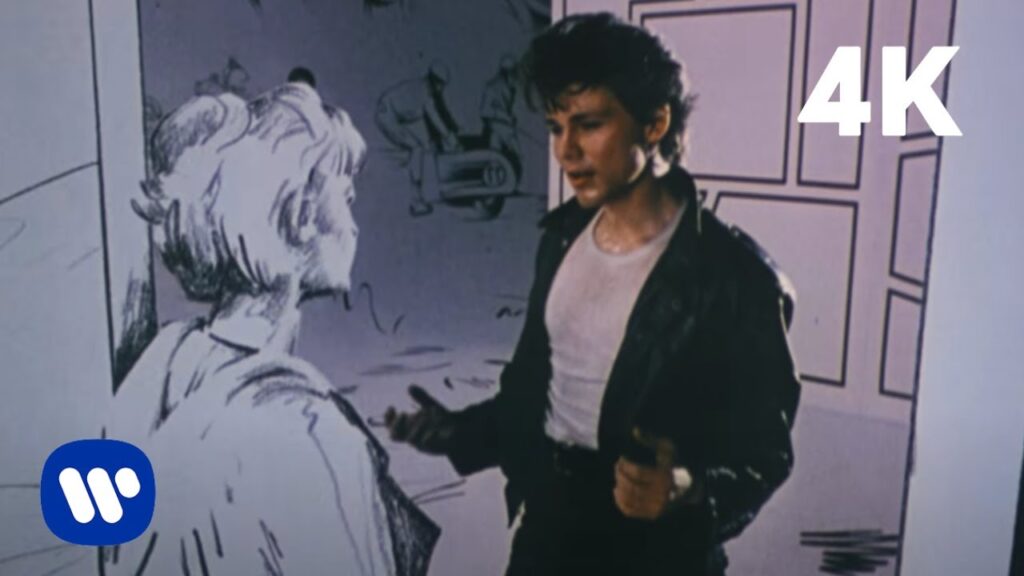
Directed by Steve Barron, the groundbreaking video blended live-action footage with pencil-sketch animation using a technique known as rotoscoping. It tells the story of a young woman who is drawn into the pages of a comic book, where she falls in love with an illustrated race car driver portrayed by Harket.
The visuals were unlike anything audiences had seen before.
The seamless transition between animation and live action felt revolutionary, helping the video become one of MTV’s most frequently played clips.
Its innovative style earned multiple MTV Video Music Awards and raised expectations for what music videos could achieve as an artistic medium.
Even today, it remains one of the greatest music videos ever produced.
Synth-Pop at Its Finest
The mid-1980s were filled with synthesizer-driven music, but “Take on Me” stood apart from many of its contemporaries.
Instead of relying solely on electronic sounds, a-ha blended synthesizers with traditional rock instrumentation, creating a fuller and more dynamic sound.
The production feels energetic without becoming cluttered.
Every instrument has room to breathe.
The arrangement builds naturally toward the soaring chorus before briefly relaxing and then building again.
That sense of movement keeps the song engaging from beginning to end.
It demonstrates how thoughtful production can elevate already exceptional songwriting.
A Worldwide Breakthrough
Before “Take on Me,” a-ha were virtually unknown outside their native Norway.
After its release, everything changed.
The song climbed to No. 1 on the Billboard Hot 100 and became a major hit across Europe, Asia, Australia, and South America. Suddenly, the trio found themselves among the biggest pop acts in the world.
Although the band would continue releasing successful albums and singles, “Take on Me” remained their defining achievement and introduced millions of listeners to Scandinavian pop long before it became a dominant force in global music.
Its success also proved that artists from outside the traditional music capitals could achieve worldwide superstardom with the right combination of talent and timing.
A Legacy That Endures
Few songs from the 1980s have remained as consistently popular as “Take on Me.”
It continues to receive heavy radio airplay, attracts hundreds of millions of streams, and regularly appears in movies, television series, and commercials. Acoustic reinterpretations have introduced the song to new audiences, revealing just how strong the underlying melody truly is.
The famous MTV Unplugged version recorded decades later offered a completely different perspective, stripping away the synthesizers and allowing the songwriting to shine in an intimate setting.
The fact that the song works equally well as an energetic pop anthem and a gentle acoustic ballad speaks volumes about its quality.
Great songs survive changing musical trends.
“Take on Me” has done exactly that.
Final Thoughts
“Take on Me” is much more than an iconic 1980s hit. It represents the perfect combination of memorable songwriting, exceptional musicianship, groundbreaking visual creativity, and perseverance.
Its instantly recognizable keyboard riff, Morten Harket’s astonishing vocal performance, and one of the most innovative music videos ever created combined to produce a recording that has remained beloved for more than four decades.
While many songs become popular for a brief moment before fading into history, “Take on Me” continues to captivate listeners of every generation. Whether discovered through classic radio, streaming playlists, or its legendary video, the song retains the same sense of excitement and wonder that made it an international phenomenon in 1985.
Some hits define a year.
“Take on Me” defined an era, and its place among the greatest pop songs ever recorded remains firmly secure.
This post has already been read 83 times!