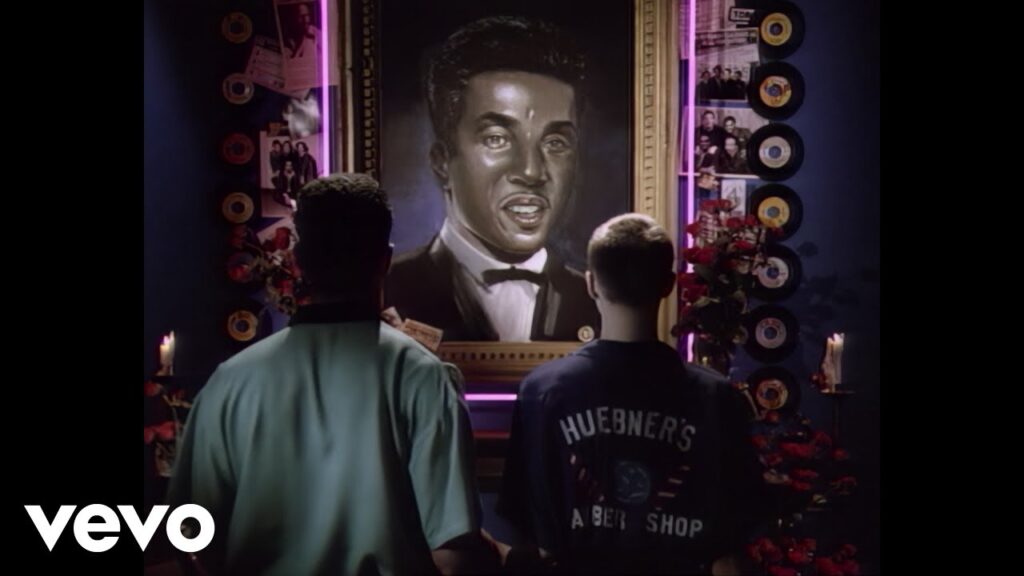
By 1987, ABC had already carved out a unique place in pop music history. Emerging from the British new wave movement with their landmark debut album The Lexicon of Love, the band became known for blending sophisticated pop, stylish production, and Martin Fry’s smooth vocals into an unmistakable sound. While many of their early hits leaned heavily on orchestral arrangements and glossy synth-pop, “When Smokey Sings” offered something both nostalgic and contemporary—a heartfelt tribute to one of soul music’s greatest songwriters and performers.
Released as the lead single from the album Alphabet City, “When Smokey Sings” became ABC’s biggest American hit, reaching No. 5 on the Billboard Hot 100. Built around an irresistible groove, polished production, and an unforgettable chorus, the song remains one of the finest pop singles of the late 1980s. More importantly, it introduced many younger listeners to the enduring influence of Smokey Robinson, whose songwriting inspired generations of artists on both sides of the Atlantic.
The Story Behind the Song
ABC formed in Sheffield, England, in the early 1980s and quickly became one of the leaders of the New Romantic movement. Led by vocalist Martin Fry, the group combined fashionable style with sophisticated songwriting, earning critical acclaim and commercial success with songs like “Poison Arrow,” “The Look of Love,” and “Be Near Me.”
“When Smokey Sings” was written by Martin Fry and keyboardist Mark White as a tribute to Smokey Robinson, one of the founding members of The Miracles and one of Motown’s greatest songwriters. Rather than simply mentioning Robinson by name, the song celebrates the emotional impact his music had on listeners, capturing the feeling that everything somehow seemed brighter whenever his voice came over the radio.
Interestingly, the song almost omitted Robinson’s name entirely because of concerns about using a real person’s name in the title. After discussions and Robinson’s blessing, the title remained unchanged, making the tribute even more personal and authentic.
Released in 1987, the song became an international success and introduced a new generation to the timeless appeal of classic Motown.
The Sound
“When Smokey Sings” is a masterclass in sophisticated 1980s pop production.
The recording opens with shimmering keyboards before introducing crisp percussion, melodic bass, tasteful guitar work, and layered synthesizers. Every element is polished without feeling artificial, creating an arrangement that feels both contemporary and warmly nostalgic.
Producer Mark White balances electronic instrumentation with soulful rhythms, allowing the groove to remain at the heart of the recording. The synthesizers provide sparkle while the rhythm section gives the song its infectious momentum.
One of the arrangement’s greatest strengths is its restraint. Rather than overwhelming listeners with excessive production, the music leaves space for Martin Fry’s vocal and the memorable melody to shine.
The result is a recording that sounds unmistakably rooted in the late 1980s while remaining surprisingly timeless.
Performance and Musicianship
Martin Fry delivers one of the strongest vocal performances of his career.
His smooth baritone conveys warmth, admiration, and genuine affection throughout the song. Rather than attempting to imitate Smokey Robinson’s legendary style, Fry wisely performs the tribute in his own distinctive voice.
His phrasing is relaxed and conversational, allowing the emotional sincerity of the lyrics to come through naturally. Every line reflects genuine appreciation rather than nostalgia for its own sake.
The musicians provide equally refined performances. The rhythm section maintains a relaxed but energetic groove, while keyboards and guitars weave together seamlessly to create an elegant musical backdrop.
The backing vocals deserve special recognition as well, adding richness and soul to the chorus while reinforcing the song’s celebration of Motown’s classic sound.
Why It Worked
Several factors helped “When Smokey Sings” become ABC’s biggest American hit.
First, the melody is immediately memorable. The chorus is uplifting, sophisticated, and impossible to forget after only a few listens.
Second, the concept itself was unique. Rather than writing another conventional love song, ABC celebrated the emotional power of music itself through one of its greatest creators.
The polished production also appealed to multiple audiences. Fans of synth-pop appreciated its contemporary sound, while older listeners recognized and appreciated the respectful nod to classic soul.
The timing was also ideal. During the late 1980s, renewed appreciation for Motown and classic soul made the song especially meaningful, while MTV helped introduce ABC’s stylish music video to millions of viewers worldwide.
Most importantly, the song succeeded because its admiration for Smokey Robinson felt genuine rather than calculated.
The Legacy
“When Smokey Sings” remains one of ABC’s defining recordings and the group’s final major international hit.
The song has become one of the most successful musical tributes ever written about another artist, earning praise not only from fans but from Smokey Robinson himself. It also helped introduce younger audiences to Robinson’s remarkable catalog, encouraging many listeners to explore the music that inspired ABC’s songwriting.
Today, the song remains a staple of classic hits and ’80s playlists while frequently appearing on compilations celebrating the finest sophisticated pop recordings of the decade.
For ABC, it stands as proof that intelligent songwriting, elegant production, and heartfelt performances never go out of style.
Final Thoughts
“When Smokey Sings” is much more than a tribute song. It is a beautifully crafted celebration of music’s ability to inspire, comfort, and bring people together across generations.
Martin Fry’s heartfelt vocal performance, Mark White’s polished production, and the band’s impeccable musicianship create a recording that remains every bit as enjoyable today as it was in 1987. Rather than relying solely on nostalgia, the song succeeds because it is built upon outstanding songwriting and genuine emotion.
More than thirty-five years after climbing the charts, “When Smokey Sings” continues to stand as one of the finest pop singles of the late 1980s. It honors one musical legend while simultaneously reminding listeners of ABC’s own remarkable talent, proving that great songs have a unique way of inspiring the artists who follow—and inspiring listeners for generations to come.
This post has already been read 63 times!