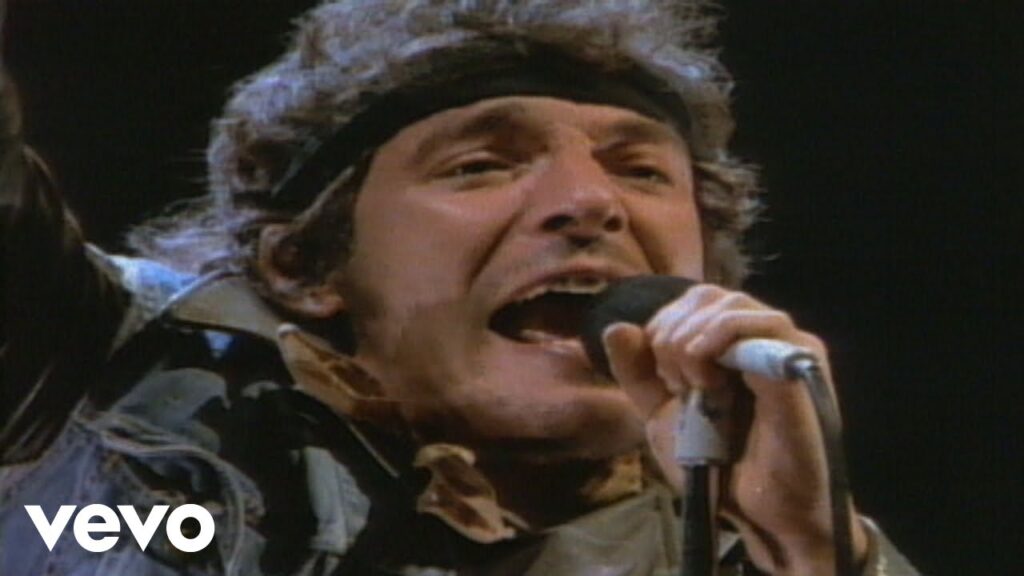
Few songs in rock history have been as celebrated—and misunderstood—as “Born in the U.S.A.” by Bruce Springsteen. With its thunderous drums, soaring synthesizers, and arena-sized chorus, it has long been embraced as one of America’s great patriotic anthems. It blares from stadium speakers, political rallies, Fourth of July celebrations, and sporting events, often as a symbol of national pride.
Yet beneath its triumphant sound lies one of the most sobering stories ever told in a mainstream rock song.
Released in 1984 as the title track from Springsteen’s blockbuster album Born in the U.S.A., the song explores the struggles of working-class Americans, particularly Vietnam veterans returning home to a country that often failed to support them. The contrast between the uplifting music and the bleak narrative has sparked conversations for decades, making it one of the most fascinating recordings in modern music.
More than forty years after its release, “Born in the U.S.A.” remains both a massive commercial success and one of rock’s most misunderstood masterpieces.
A Story of Broken Promises
Bruce Springsteen has always written about ordinary people.
Factory workers.
Small-town dreamers.
Unemployed laborers.
Veterans trying to rebuild their lives.
“Born in the U.S.A.” continues that tradition by telling the story of a young man whose life is shaped by hardship from the very beginning. Drafted into the Vietnam War, he returns home expecting opportunity but instead encounters unemployment, neglect, and limited prospects.
Rather than celebrating the American Dream, Springsteen examines what happens when that dream feels out of reach.
The narrator isn’t rejecting his country.
He’s asking why his country abandoned people like him.
That distinction is what gives the song its emotional power.
The Music Creates a Powerful Illusion
One reason so many people misunderstand “Born in the U.S.A.” is its unforgettable musical arrangement.
The opening drumbeat immediately commands attention.
Max Weinberg’s explosive performance sounds enormous, filling the recording with energy before the first lyric is even sung. Roy Bittan’s synthesizers create a bright, triumphant atmosphere, while Springsteen’s passionate vocals elevate the chorus into something that feels almost celebratory.
If listeners focus only on the music, it’s easy to assume the song is patriotic in the traditional sense.
But Springsteen intentionally created that contrast.
The uplifting arrangement draws audiences in.
The lyrics reveal a far more complicated reality.
Few songs have used irony so effectively.
Bruce Springsteen’s Emotional Performance
Springsteen delivers one of the defining vocal performances of his career.
His voice is rough, urgent, and deeply human, reflecting both pride and frustration. He doesn’t sound defeated, but he doesn’t sound victorious either.
Instead, he sings like someone desperately trying to be heard.
Every time he shouts the title, it carries multiple meanings.
It can be interpreted as pride.
It can sound like defiance.
It can even feel like heartbreak.
That emotional complexity is one reason the song continues to inspire discussion decades later.
Great performances leave room for interpretation.
Springsteen accomplishes exactly that.
The Album That Changed Everything
Although Springsteen had already earned critical acclaim with albums like Born to Run, Darkness on the Edge of Town, and Nebraska, Born in the U.S.A. transformed him into one of the biggest stars in the world.
Released in 1984, the album produced an astonishing seven Top 10 singles, an achievement rarely matched in rock history.
The title track became its emotional centerpiece.
Combined with relentless touring and Springsteen’s legendary live performances, the album sold more than 30 million copies worldwide and remains one of the best-selling records ever released.
It wasn’t simply a commercial triumph.
It became a defining statement about America during the 1980s.
A Song Frequently Misinterpreted
Few songs have generated as much misunderstanding as “Born in the U.S.A.”
Its chorus has often been quoted without consideration of the verses that surround it. Over the years, politicians from multiple parties have attempted to associate themselves with the song despite its deeply critical message.
Springsteen has repeatedly explained that the song is about the treatment of veterans and the struggles faced by working-class Americans rather than unquestioning patriotism.
Ironically, its enormous chorus may have contributed to the confusion.
The melody is so uplifting that many listeners overlook the story unfolding beneath it.
That disconnect has become part of the song’s lasting legacy.
Built for Stadiums, Rooted in Reality
Musically, “Born in the U.S.A.” feels enormous.
The pounding drums.
The soaring synthesizers.
The powerful guitar work.
Everything about the production was designed to fill arenas.
Producer Jon Landau and Springsteen crafted a recording that sounded massive without sacrificing emotional authenticity.
The E Street Band performs with remarkable discipline throughout.
Rather than overwhelming the vocals, every instrument contributes to the song’s steady, determined momentum.
It’s one of the defining examples of arena rock done right.
A Lasting Cultural Impact
More than four decades after its release, “Born in the U.S.A.” remains one of Bruce Springsteen’s signature songs.
It continues to receive regular radio airplay and appears in documentaries, films, television programs, and live performances around the world.
The song has also become an important cultural reference point whenever discussions arise about veterans, economic hardship, or the meaning of patriotism.
Its ability to generate conversation is one of its greatest strengths.
The best songs don’t simply entertain.
They encourage people to think.
Springsteen’s masterpiece continues to do exactly that.
Final Thoughts
“Born in the U.S.A.” is one of the greatest examples of how powerful songwriting can challenge assumptions. Beneath its arena-sized chorus and unforgettable melody lies a deeply personal story about sacrifice, disappointment, and resilience.
Bruce Springsteen didn’t write a simple patriotic anthem.
He wrote a song about people who loved their country while questioning whether that country had lived up to its promises.
That honesty is what has allowed the song to endure.
Its thunderous production, unforgettable chorus, and emotionally charged performance helped make it one of the defining recordings of the 1980s, but its thoughtful lyrics are what continue to give it meaning today.
Many songs become famous because they’re catchy.
“Born in the U.S.A.” became legendary because it combined unforgettable music with a message that remains just as relevant today as it was in 1984.
It’s a reminder that the greatest songs often reveal their deepest truths only after listeners look beyond the chorus.
This post has already been read 78 times!