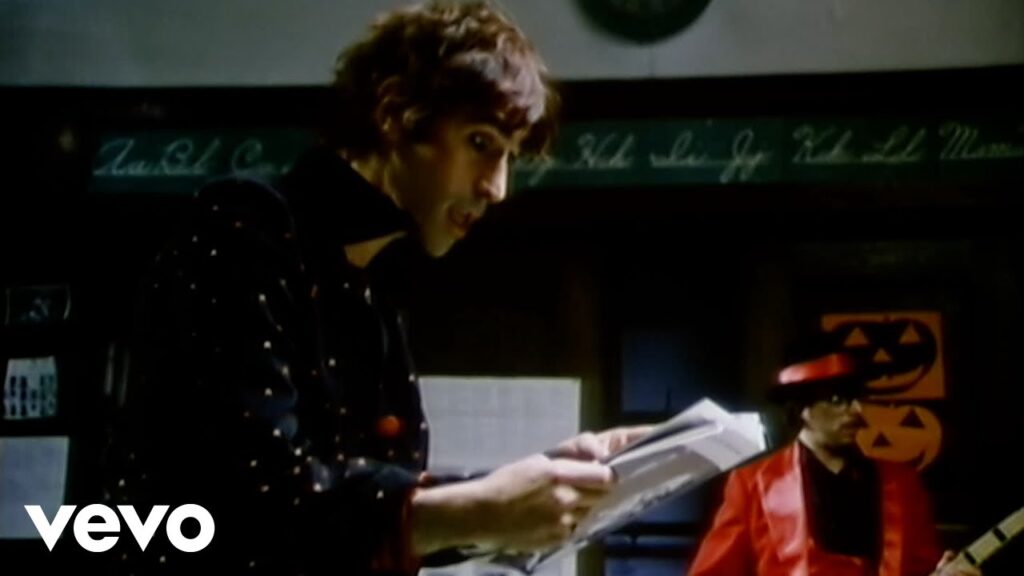
Some songs are impossible to hear without immediately smiling. “Centerfold” by The J. Geils Band is one of those rare records. Released in 1981 as the lead single from the album Freeze Frame, the song combined an unforgettable keyboard riff, a sing-along chorus, and a playful storyline into one of the biggest pop-rock hits of the decade. It topped the Billboard Hot 100 for six consecutive weeks and helped transform a hardworking rock band into international superstars.
While many listeners remember “Centerfold” for its irresistible energy, the song also tells a surprisingly relatable story about expectations, nostalgia, and realizing that the people we remember from our past often take unexpected paths. Its blend of humor, catchy songwriting, and polished production has helped it remain a staple of classic rock radio for more than four decades.
Few songs capture the fun-loving spirit of the early MTV era quite as effortlessly.
A Story Everyone Can Understand
Written by keyboardist Seth Justman, “Centerfold” centers on a simple but memorable premise.
The narrator discovers that a former high school crush has become the centerfold model in an adult magazine, leaving him surprised and uncertain about how to process what he’s seeing.
Rather than focusing on scandal, the song explores the uncomfortable realization that people grow, change, and often become very different from the images we carry in our memories.
It’s a humorous concept, but one rooted in genuine human emotion.
Most people can relate to reconnecting with someone from the past and discovering they’ve taken an unexpected path.
Peter Wolf’s Charismatic Performance
Peter Wolf was one of rock’s great frontmen, and “Centerfold” showcases his personality perfectly.
His energetic vocal performance strikes just the right balance between excitement, disbelief, and playful humor.
He never treats the story too seriously.
Instead, he invites listeners to laugh along with the narrator’s predicament.
Wolf’s enthusiasm is contagious.
His voice gives the song much of its lasting charm.
It’s one of the defining performances of his career.
The Keyboard Hook Everyone Knows
Although “Centerfold” features strong guitar work throughout, its most recognizable musical element is Seth Justman’s instantly memorable keyboard riff.
From the opening notes, the song grabs the listener’s attention.
The melody is simple.
The rhythm is infectious.
The hook remains stuck in your head long after the song ends.
Combined with the driving rhythm section and crunchy guitars, it creates one of the most recognizable introductions of the entire decade.
Perfectly Crafted Pop-Rock
Produced by Seth Justman, “Centerfold” blends rock guitars, pop melodies, and new wave influences into a polished package that appealed to a massive audience.
The production is crisp without sounding sterile.
The guitars provide plenty of energy.
The keyboards brighten the arrangement.
The backing vocals add excitement to every chorus.
Everything works together to create a song that feels effortless.
Behind that apparent simplicity lies exceptional craftsmanship.
The Hit That Changed Everything
Before Freeze Frame, The J. Geils Band had built a loyal following through years of energetic live performances and blues-influenced rock albums.
They were respected musicians, but mainstream superstardom had largely eluded them.
“Centerfold” changed that almost overnight.
Released in late 1981, it climbed to No. 1 on the Billboard Hot 100, where it remained for six consecutive weeks.
It became the band’s biggest hit by far and introduced them to millions of new fans around the world.
A Favorite of the MTV Generation
The colorful music video received heavy airplay during MTV’s formative years.
Its playful school-themed visuals perfectly matched the song’s humorous storyline and helped make “Centerfold” one of the network’s signature early hits.
The combination of memorable music and entertaining visuals made it nearly impossible to escape during the early 1980s.
The song became woven into the fabric of the MTV era.
Even today, the video remains instantly recognizable to fans of the decade.
A Song That Never Lost Its Energy
Unlike many novelty-style hits that lose their appeal after repeated listens, “Centerfold” has remained remarkably durable.
Its irresistible melody, lively performance, and relatable story continue to entertain audiences decades after its release.
The song remains a fixture on classic rock radio, party playlists, sporting events, and celebrations of 1980s music.
Its joyful energy never seems to fade.
That’s the mark of a truly great pop record.
Why It Still Works
Part of “Centerfold’s” enduring success comes from its refusal to take itself too seriously.
The song is playful without becoming silly.
Its humor feels genuine.
Its musicianship remains outstanding.
Every member of The J. Geils Band contributes to the recording’s infectious momentum.
The result is a song that’s just as enjoyable on the hundredth listen as it is on the first.
Very few pop hits can make that claim.
Final Thoughts
“Centerfold” stands among the defining pop-rock songs of the early 1980s because it perfectly combines exceptional songwriting, polished production, unforgettable hooks, and Peter Wolf’s charismatic vocal performance. The J. Geils Band created a record that balances humor with outstanding musicianship, proving that a fun song can also be an exceptionally well-crafted one.
Its commercial success transformed the band’s career, but its lasting popularity comes from something much simpler. It makes listeners feel good. Every keyboard riff, every chorus, and every playful lyric contributes to a recording that continues to brighten playlists more than forty years after its release.
Many hit songs capture a moment in time.
“Centerfold” captured a feeling of pure fun.
That infectious spirit has secured its place as one of the most beloved rock hits of the MTV generation.
This post has already been read 84 times!