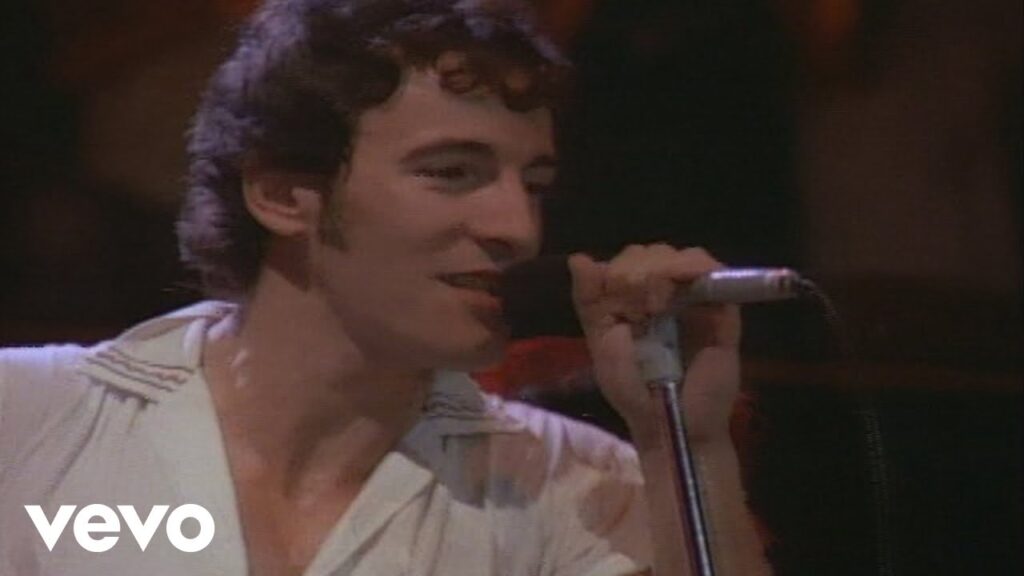
Bruce Springsteen had already earned a reputation as one of rock music’s greatest songwriters when “Dancing in the Dark” arrived in 1984, but this song introduced him to an entirely new audience. Released as the lead single from the landmark album Born in the U.S.A., it became the biggest hit of his career, blending his signature storytelling with polished pop production and an irresistible beat. The result was a song that dominated radio, MTV, and concert arenas while helping transform Springsteen from a respected rock icon into a worldwide superstar.
Despite its upbeat sound and infectious chorus, “Dancing in the Dark” is far more than a catchy pop song. Beneath the shimmering synthesizers and driving rhythm lies a thoughtful reflection on frustration, self-doubt, and the desire for change. That emotional depth, combined with Springsteen’s passionate performance, has made it one of the defining songs of the 1980s.
More than forty years after its release, it remains one of his most beloved and enduring recordings.
Born Out of Frustration
Ironically, “Dancing in the Dark” almost never existed.
As Bruce Springsteen was finishing Born in the U.S.A., producer Jon Landau believed the album needed one more potential hit single. Springsteen initially resisted the suggestion, feeling the record was already complete.
Frustrated by the request, he sat down and wrote “Dancing in the Dark” in a single evening.
What began as an assignment quickly became one of the greatest songs of his career.
It’s one of rock music’s most famous examples of creative pressure leading to extraordinary results.
A New Sound for Springsteen
While Springsteen never abandoned his heartland rock roots, “Dancing in the Dark” embraced a more contemporary sound than many of his earlier recordings.
Roy Bittan’s bright synthesizer riff immediately gives the song its unmistakable identity, while Max Weinberg’s powerful drumming and Garry Tallent’s steady bass line provide a rock-solid foundation.
The E Street Band sounds energetic and focused throughout.
The arrangement strikes an impressive balance between rock authenticity and pop accessibility.
That combination helped the song appeal to longtime fans while attracting millions of new listeners.
Bruce Springsteen’s Honest Performance
Springsteen has always excelled at making listeners believe every word he sings.
His vocal performance on “Dancing in the Dark” perfectly captures feelings of restlessness and determination without becoming melodramatic.
He sounds frustrated.
Hopeful.
Driven.
Rather than hiding vulnerability behind bravado, Springsteen embraces it, making the song feel deeply personal while remaining universally relatable.
It’s one of the strongest vocal performances of his remarkable career.
An Anthem for Anyone Feeling Stuck
Although “Dancing in the Dark” became a dance-floor favorite, its message is surprisingly introspective.
The song explores the feeling of wanting something in life to change while struggling to find the first step forward. It speaks to anyone who has ever felt trapped by routine, uncertainty, or the fear of standing still.
Rather than offering easy solutions, Springsteen acknowledges those emotions honestly while suggesting that action—even imperfect action—is better than remaining frozen.
That emotional honesty has helped the song resonate with audiences across generations.
Its message feels just as relevant today as it did in 1984.
The Song That Took Over MTV
The music video for “Dancing in the Dark” became almost as famous as the song itself.
Directed by acclaimed filmmaker Brian De Palma, the video captured Springsteen performing before an enthusiastic audience during a concert. Near the end, he invited a young woman from the crowd onto the stage for a brief dance.
That woman was a then-unknown actress named Courteney Cox.
Her appearance became one of MTV’s most memorable moments and remains closely associated with both the song and Springsteen’s career.
The video’s heavy rotation introduced Bruce Springsteen to millions of viewers around the world.
A Career-Defining Success
“Dancing in the Dark” became Bruce Springsteen’s biggest commercial hit, reaching No. 2 on the Billboard Hot 100 and remaining on the charts for months.
The song also earned Springsteen his first Grammy Award, winning Best Rock Vocal Performance, Male.
Its success helped propel Born in the U.S.A. into one of the best-selling albums in history, producing an astonishing string of hit singles and cementing Springsteen’s place among the biggest artists of the decade.
Few songs have had such a dramatic impact on an already successful career.
A Live Performance Favorite
Springsteen has always been known as one of rock’s greatest live performers, and “Dancing in the Dark” quickly became one of the highlights of his concerts.
Fans eagerly await the moment when he invites someone from the audience to join him on stage, continuing a tradition inspired by the original music video.
The song’s driving rhythm, massive chorus, and uplifting energy make it a natural centerpiece of his marathon performances.
Decades later, it still generates one of the loudest audience reactions of the night.
A Lasting Legacy
“Dancing in the Dark” has remained one of the defining songs of the 1980s because it balances commercial appeal with genuine artistic substance.
Its influence can be heard in countless rock and pop recordings that combine introspective songwriting with radio-friendly production.
The song continues to appear in films, television shows, commercials, and streaming playlists, introducing new listeners to one of Springsteen’s greatest achievements.
Its opening synthesizer remains instantly recognizable.
Its chorus remains impossible not to sing along with.
Its message remains timeless.
Final Thoughts
“Dancing in the Dark” stands as one of Bruce Springsteen’s greatest accomplishments because it captures the universal desire for change while delivering one of the most infectious rock songs of the 1980s. The combination of heartfelt songwriting, outstanding musicianship, polished production, and Springsteen’s passionate vocal performance created a recording that appealed to both critics and mainstream audiences alike.
What began as a song written under pressure became the biggest hit of Springsteen’s career and one of the defining moments of the MTV era. More importantly, it continues to resonate with listeners because its emotional core is authentic.
Everyone feels stuck sometimes.
“Dancing in the Dark” reminds us that even during life’s uncertain moments, hope often begins with taking that first step—even if it’s just getting up and dancing.
This post has already been read 78 times!