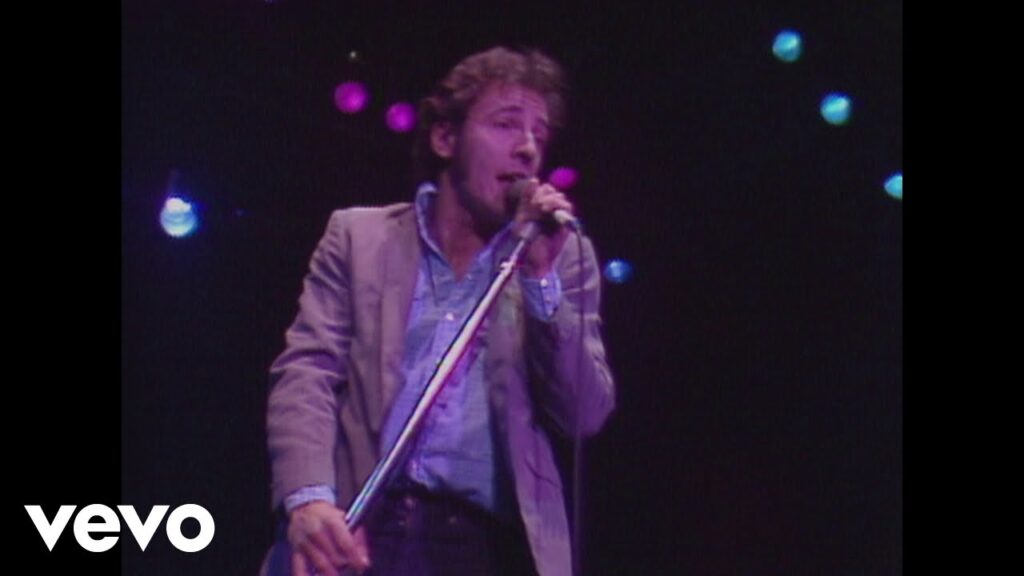
Before Bruce Springsteen became one of the biggest names in rock music, he was already earning critical acclaim for his vivid storytelling, electrifying live performances, and deeply personal songwriting. Albums like Born to Run and Darkness on the Edge of Town had made him a favorite among critics and devoted fans, but mainstream pop success had remained just beyond his reach.
That changed in 1980 with “Hungry Heart.”
Released as the lead single from The River, the song became Springsteen’s first Top 10 hit on the Billboard Hot 100 and introduced millions of new listeners to the artist known simply as “The Boss.” While it was lighter and more radio-friendly than much of his earlier work, “Hungry Heart” still carried the emotional honesty and working-class spirit that defined Springsteen’s music.
More than four decades later, it remains one of his most beloved songs, a staple of classic rock radio, and one of the greatest sing-alongs ever recorded.
A Song That Almost Belonged to Someone Else
One of the most fascinating stories behind “Hungry Heart” is that Bruce Springsteen never intended to record it himself.
He originally wrote the song for the legendary The Ramones, whose fast, energetic punk style seemed like a perfect fit for its simple melody and catchy chorus.
After hearing the demo, producer Jon Landau encouraged Springsteen to keep the song for himself.
It was advice that would change his career.
Springsteen agreed, recorded the song with the E Street Band, and unknowingly created the biggest commercial hit of his career up to that point.
Sometimes the best decisions are the ones made at the last minute.
A Different Sound for Springsteen
Fans familiar with Springsteen’s earlier work immediately noticed something different.
“Hungry Heart” embraced concise pop songwriting without abandoning the emotional depth that made his music special.
The melody was instantly memorable.
The chorus practically invited audiences to sing along.
The production sounded brighter and more accessible than much of his previous material.
Yet beneath the catchy exterior remained a story full of complicated emotions.
That’s classic Springsteen.
He often wrapped difficult subjects inside music that felt surprisingly uplifting.
A Story of Longing and Regret
Unlike many pop songs that celebrate romance, “Hungry Heart” tells the story of a man who leaves behind his family in search of something he can’t quite define.
As the song unfolds, it becomes clear that his search hasn’t brought happiness.
Instead, he’s left questioning the choices he’s made.
Springsteen doesn’t judge the character.
He simply presents him honestly.
The result is a surprisingly thoughtful narrative disguised as an upbeat rock song.
It’s one of the reasons the track continues rewarding repeated listens.
Bruce’s Warm, Unpolished Vocal
Bruce Springsteen has never relied on technical perfection as a singer.
His strength has always been authenticity.
On “Hungry Heart,” his voice sounds friendly, approachable, and completely believable.
Producer Jon Landau reportedly sped up the recording slightly, giving Springsteen’s vocal a brighter, younger sound.
Whether listeners notice the technical adjustment or not, the performance feels wonderfully natural.
Springsteen sounds like an ordinary person telling an extraordinary story.
That sincerity became one of his greatest trademarks.
The E Street Band at Their Best
Although “Hungry Heart” shines because of Springsteen’s songwriting, the E Street Band deserves enormous credit for bringing it to life.
The rhythm section creates an easy, driving groove.
Roy Bittan’s keyboards provide warmth and texture.
Clarence Clemons’ saxophone adds emotional color without dominating the arrangement.
Every musician contributes exactly what’s needed.
The performance feels relaxed yet incredibly polished.
It’s the sound of a legendary band working together at the height of its powers.
A Breakthrough Hit
Released in October 1980, “Hungry Heart” quickly climbed the charts.
It reached No. 5 on the Billboard Hot 100, becoming Bruce Springsteen’s first Top 10 single in the United States.
The success introduced him to countless listeners who had never purchased one of his albums.
Meanwhile, The River became Springsteen’s first album to reach No. 1 on the Billboard 200.
The commercial breakthrough helped lay the foundation for the massive success of Born in the U.S.A. just a few years later.
Without “Hungry Heart,” Springsteen’s rise to global superstardom may have taken a very different path.
A Concert Tradition Like No Other
If there’s one place where “Hungry Heart” truly comes alive, it’s at a Bruce Springsteen concert.
For decades, audiences have enthusiastically sung nearly every word, often overpowering the band during the opening chorus.
Springsteen frequently steps away from the microphone, smiling as thousands of fans carry the song themselves.
Those moments perfectly capture the relationship between Bruce and his audience.
It’s less a performance than a shared experience.
Very few songs inspire that level of participation.
Why It Has Endured
“Hungry Heart” succeeds because it balances optimism and melancholy so effortlessly.
The melody feels joyful.
The lyrics reveal emotional uncertainty.
That contrast mirrors real life.
People often smile while carrying private struggles.
Springsteen understood that complexity better than almost any songwriter of his generation.
He created characters who felt authentic because they contained contradictions.
The man in “Hungry Heart” isn’t a hero or a villain.
He’s simply human.
One of Bruce Springsteen’s Signature Songs
Although Bruce Springsteen has released countless classics throughout his remarkable career, “Hungry Heart” remains among his most recognizable recordings.
It introduced his songwriting to a broader audience while proving that meaningful storytelling and commercial success could exist together.
The song opened doors without requiring him to compromise his artistic identity.
That’s an achievement few artists ever accomplish.
A Timeless Anthem About the Search for Something More
More than forty years after it first climbed the charts, “Hungry Heart” continues connecting with listeners because its emotional message remains universal. Nearly everyone has experienced moments of uncertainty, restlessness, or the feeling that something important is missing. Bruce Springsteen transformed those emotions into one of the most inviting melodies of his career.
Its unforgettable chorus, heartfelt storytelling, outstanding musicianship, and Springsteen’s honest vocal performance have ensured that the song remains an essential part of classic rock history. It sounds just as welcoming today as it did in 1980.
For Bruce Springsteen, “Hungry Heart” became much more than his first Top 10 hit. It marked the moment when one of America’s greatest songwriters crossed into the mainstream without sacrificing the authenticity that had made him special from the very beginning—and audiences have been singing along ever since.
This post has already been read 70 times!