Few songs from the 1980s are as instantly recognizable as “Kyrie” by Mr. Mister. With its soaring chorus, polished production, and unforgettable melody, the song became one of the biggest hits of 1986, helping cement the band’s place among the decade’s elite pop-rock acts. While many listeners sang along to its mysterious title without knowing exactly what it meant, “Kyrie” offered far more than another catchy radio single.
Blending rock, pop, and spiritual imagery, the song stood out during an era dominated by love songs and dance tracks. It demonstrated that mainstream pop could tackle deeper themes while still delivering an infectious hook. Combined with Richard Page’s powerful vocal and the band’s impeccable musicianship, “Kyrie” became one of the defining records of the MTV generation.
More than forty years after its release, it remains a shining example of sophisticated 1980s pop at its very best.
A Band on the Rise
Mr. Mister formed in Los Angeles in the early 1980s, bringing together vocalist and bassist Richard Page, guitarist Steve Farris, keyboardist Steve George, and drummer Pat Mastelotto.
All four musicians had extensive session experience before forming the group, and that professionalism immediately showed in their recordings.
Their breakthrough came with the album Welcome to the Real World, which also produced the massive hit “Broken Wings.”
Instead of fading after one success, the band followed it with an even bigger achievement.
“Kyrie” became their second consecutive No. 1 single.
What Does “Kyrie” Mean?
One reason the song fascinated listeners was its unusual title.
“Kyrie” comes from the Greek phrase “Kyrie eleison,” meaning “Lord, have mercy.”
The expression has been used in Christian liturgy for centuries.
Rather than writing a traditional religious song, however, Richard Page and co-writer John Lang used the phrase symbolically.
The lyrics describe life’s journey, uncertainty, and the search for guidance during difficult times.
Whether listeners interpret the song spiritually or simply as a reflection on perseverance, its message remains deeply personal.
That openness has helped the song resonate across generations.
Richard Page’s Outstanding Vocal
Richard Page delivers one of the strongest vocal performances of the decade.
His voice combines impressive range with emotional sincerity.
The verses feel reflective and intimate.
Then comes the chorus.
Page’s soaring delivery transforms the repeated title into something uplifting and unforgettable.
He never overpowers the song.
Instead, he lets the melody naturally build toward its emotional peak.
It’s the kind of vocal performance that elevates already excellent songwriting into something truly memorable.
A Perfect Blend of Rock and Synth-Pop
Produced by Paul De Villiers, “Kyrie” perfectly balances electronic textures with traditional rock instrumentation.
Shimmering synthesizers provide atmosphere.
Steve Farris contributes tasteful guitar work that complements rather than competes with the keyboards.
The rhythm section supplies a steady, driving pulse that keeps the song moving forward.
Every musical element serves the emotional arc of the composition.
The production sounds polished without losing its warmth.
It’s one of the reasons the recording has aged so gracefully.
A Number One Smash
Released in late 1985, “Kyrie” steadily climbed the charts before reaching No. 1 on the Billboard Hot 100 in March 1986.
It became Mr. Mister’s second consecutive chart-topper following “Broken Wings,” an impressive achievement for a relatively new band.
The success helped Welcome to the Real World become a multi-platinum album and established Mr. Mister as one of the premier pop-rock acts of the era.
For a time, they seemed unstoppable.
A Memorable Music Video
Like many major hits of the MTV era, “Kyrie” benefited from a popular music video.
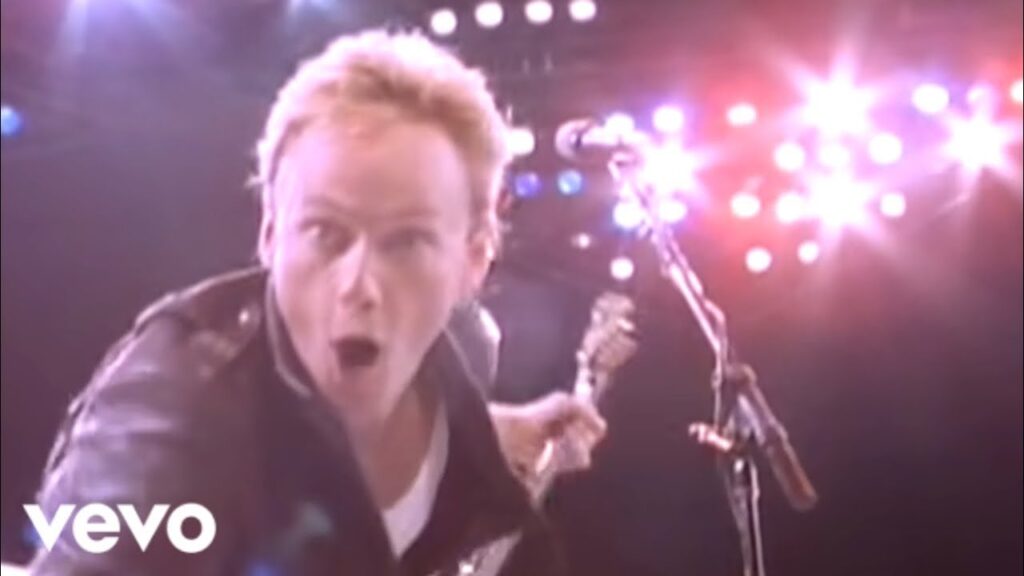
Rather than creating a complicated narrative, the video largely featured footage of the band performing while on tour, mixed with scenes from life on the road.
The documentary-style approach reinforced the song’s themes of travel, searching, and life’s ongoing journey.
It also showcased the chemistry between the band members, reminding audiences that Mr. Mister was a genuine group rather than a studio project.
Why the Song Still Connects
Part of “Kyrie’s” enduring appeal comes from its flexibility.
Listeners can approach it from many different perspectives.
Some hear a spiritual anthem.
Others hear a song about perseverance through life’s challenges.
Still others simply enjoy its soaring melody and infectious chorus.
Great songs often leave room for personal interpretation.
“Kyrie” does exactly that.
Its emotional honesty transcends any single meaning.
Mr. Mister’s Lasting Legacy
Although the band enjoyed a relatively brief run at the top of the charts, their influence remains significant.
Welcome to the Real World produced two No. 1 singles and demonstrated that thoughtful songwriting and polished musicianship could thrive in mainstream pop.
“Kyrie” represents everything the group did well.
Strong melodies.
Excellent performances.
Sophisticated production.
Meaningful lyrics.
It’s a record that continues earning new fans decades after its release.
A Song That Continues the Journey
More than forty years after topping the charts, “Kyrie” remains one of the most inspiring and beautifully crafted songs of the 1980s. Its unforgettable chorus, elegant production, Richard Page’s exceptional vocal performance, and thoughtful message continue making it a favorite among classic pop and rock fans.
The song reminds us that life’s path is rarely straightforward and that everyone searches for guidance, strength, and hope along the way. Whether heard as a spiritual reflection or simply a beautifully written pop song, its emotional impact remains undeniable.
For Mr. Mister, “Kyrie” became much more than another No. 1 hit. It became the band’s signature statement—a timeless anthem that proves meaningful lyrics and irresistible melodies can exist together in perfect harmony.
This post has already been read 87 times!