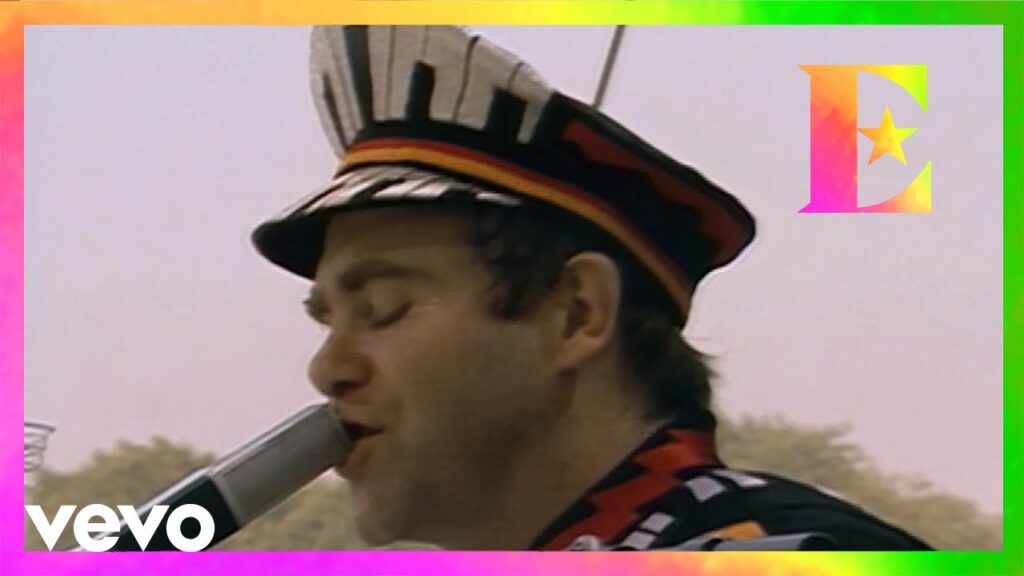
Released in 1980 as the lead single from 21 at 33, “Little Jeannie” marked an important moment in Elton John’s career. After dominating much of the 1970s with an extraordinary string of hit albums and singles, Elton entered a new decade facing changing musical trends. Disco was fading, new wave was on the rise, and younger artists were beginning to dominate the charts. Rather than chase every new trend, Elton delivered a heartfelt piano ballad that reminded listeners why he had become one of the greatest singer-songwriters of all time.
Although “Little Jeannie” doesn’t always receive the same attention as classics like “Rocket Man,” “Tiny Dancer,” or “Your Song,” it became one of his biggest American hits of the decade. Built around a memorable melody, warm production, and one of Elton’s most sincere vocal performances, the song remains an underrated gem in his enormous catalog.
Song Overview
“Little Jeannie” is a soft pop ballad centered on devotion, regret, and enduring affection. The song tells a deeply personal story without becoming overly sentimental, allowing listeners to connect with its emotions regardless of their own experiences.
Unlike many of Elton John’s grander compositions, “Little Jeannie” relies on subtlety. The arrangement never becomes flashy, choosing instead to let the melody and vocals carry the emotional weight.
That simplicity is one of the song’s greatest strengths.
Everything feels carefully measured, resulting in a recording that remains elegant more than forty years after its release.
Songwriting
Unlike many of Elton John’s biggest hits, “Little Jeannie” was not written with longtime lyricist Bernie Taupin. Instead, the lyrics were written by Gary Osborne, who collaborated with Elton on several projects during the late 1970s and early 1980s.
Osborne’s writing captures feelings of longing and tenderness with straightforward language that never feels forced. The lyrics paint an emotional picture while leaving enough room for listeners to interpret the story in their own way.
Musically, Elton delivers one of his strongest melodies of the period. The verses gradually build toward an expansive chorus that is both emotionally satisfying and immediately memorable.
The composition demonstrates Elton’s remarkable ability to write songs that sound both sophisticated and effortlessly accessible.
Performance
Elton John’s vocal performance is among the finest of his early-1980s recordings.
He sings with warmth and restraint, resisting the temptation to oversell the emotion. His voice conveys sincerity throughout the performance, making every line feel genuine.
His piano work anchors the entire arrangement. Rather than filling every available space with elaborate flourishes, Elton allows the chords and melody to breathe, creating an atmosphere that perfectly complements the song’s reflective mood.
The supporting musicians also deserve recognition. Their tasteful performances provide texture without distracting from the song’s emotional core.
Production
Produced by Clive Franks and Elton John, “Little Jeannie” features a polished yet understated sound.
The production incorporates soft keyboards, layered harmonies, gentle percussion, and clean guitar work without ever feeling overproduced. While unmistakably a product of the early 1980s, the recording avoids many of the era’s more dated production choices.
Every instrument serves the song rather than competing for attention.
The result is a balanced mix that has aged surprisingly well.
Standout Moments
Several elements make “Little Jeannie” particularly memorable:
- One of Elton John’s most heartfelt vocal performances of the decade.
- A beautiful piano-driven melody.
- Gary Osborne’s thoughtful, understated lyrics.
- A chorus that grows more powerful with every listen.
- Tasteful production that enhances rather than overwhelms the songwriting.
Together, these qualities transform what could have been a standard adult contemporary ballad into one of Elton John’s overlooked classics.
Weak Points
The song’s understated nature may also explain why it isn’t discussed as frequently as some of Elton’s larger-than-life hits.
Listeners looking for energetic rock songs like “Saturday Night’s Alright for Fighting” or upbeat anthems such as “I’m Still Standing” may find “Little Jeannie” too restrained.
Additionally, because it was written during a transitional period in Elton’s career, it is sometimes overshadowed by both his legendary 1970s work and his commercial resurgence later in the decade.
Those are relatively minor criticisms, however, as the song succeeds precisely because of its quiet confidence.
Legacy
“Little Jeannie” became one of Elton John’s biggest American hits, reaching No. 3 on the Billboard Hot 100, making it his highest-charting U.S. single between the late 1970s and the release of several later 1980s successes.
The song helped establish that Elton remained a major commercial force entering the new decade, even as musical tastes evolved rapidly.
Although it isn’t always included among his signature songs, longtime fans have continued to appreciate its craftsmanship and emotional honesty. It also demonstrated Elton’s ability to succeed with collaborators beyond Bernie Taupin while still maintaining the musical qualities that made him famous.
Over time, “Little Jeannie” has earned recognition as one of the hidden treasures in Elton John’s extensive catalog.
Final Score
8.5/10
“Little Jeannie” is an elegant, heartfelt ballad that showcases Elton John’s remarkable gift for melody and emotional storytelling. While it may not possess the cultural impact of his greatest classics, it remains one of the strongest and most underrated singles of his early-1980s output. Beautifully performed, thoughtfully written, and gracefully produced, it’s a reminder that some of the best songs in an artist’s catalog aren’t always the ones that receive the most attention.
This post has already been read 76 times!