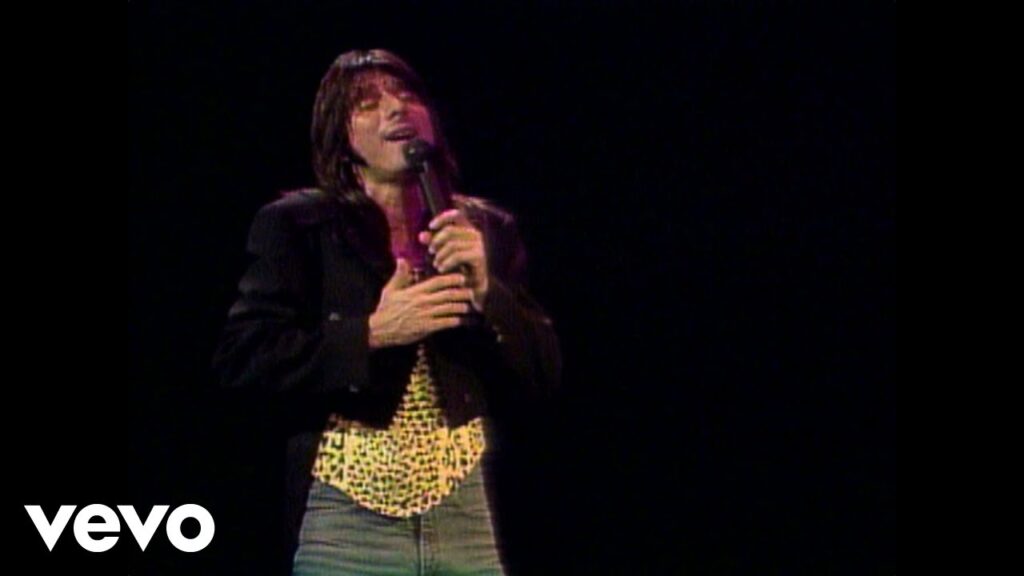
Power ballads became one of the defining sounds of the 1980s, but few have achieved the lasting popularity of Journey’s “Open Arms.” Released in 1982, the song transformed the California rock band into even bigger superstars by proving they could deliver heartfelt emotion with the same conviction they brought to arena-rock anthems like “Don’t Stop Believin'” and “Wheel in the Sky.” With its unforgettable piano melody, Steve Perry’s soaring vocal performance, and one of the most memorable choruses in rock history, “Open Arms” has become a timeless classic that continues to resonate with listeners more than four decades after its release.
Today, it remains one of Journey’s signature songs and one of the greatest power ballads ever recorded. Its universal message of forgiveness, reconciliation, and enduring love has ensured its place on classic rock radio, wedding playlists, and concert setlists around the world.
The origins of “Open Arms” actually predate Journey’s commercial peak. Keyboardist Jonathan Cain began writing the song before joining the band while he was still a member of The Babys. The composition was initially rejected by his former group, who felt the ballad was too soft for their image. Rather than abandoning the idea, Cain kept it with him when he joined Journey in 1980.
Once in the band, Cain collaborated with lead singer Steve Perry to complete the song. Perry contributed lyrics and melodic refinements, helping transform Cain’s unfinished composition into one of Journey’s defining recordings. Their partnership would become one of the band’s greatest creative strengths, blending Cain’s melodic instincts with Perry’s extraordinary gift for emotional storytelling.
The timing couldn’t have been better. Journey had just achieved major success with Escape, an album packed with rock hits, and “Open Arms” provided the perfect emotional centerpiece.
From its opening piano chords, the song establishes an atmosphere of intimacy and reflection. Jonathan Cain’s elegant piano performance carries the opening verses almost entirely on its own, creating a sense of vulnerability before the rest of the band gradually enters.
As the arrangement builds, Neal Schon’s tasteful guitar fills, Ross Valory’s melodic bass, Steve Smith’s restrained drumming, and Gregg Rolie’s subtle keyboard textures create an increasingly rich musical landscape. Rather than overwhelming the melody, every instrument serves the song’s emotional progression.
Producer Kevin Elson deserves considerable credit for the recording’s timeless sound. Although unmistakably rooted in the early 1980s, the production avoids excessive studio effects that dated many recordings from the era. The balance between acoustic piano, electric guitar, and layered vocals remains remarkably fresh, allowing the song’s emotional core to shine through.
Neal Schon’s guitar work deserves special recognition. Instead of relying on flashy solos, he delivers tasteful melodic lines that perfectly complement Perry’s vocals. His restrained approach demonstrates that technical brilliance often lies in knowing exactly what not to play.
At the heart of the recording is Steve Perry’s extraordinary vocal performance. Widely regarded as one of rock’s greatest singers, Perry delivers “Open Arms” with remarkable control, warmth, and emotional honesty. He begins quietly, almost conversationally, before gradually building toward the song’s unforgettable climax.
Unlike many power ballads that depend on vocal theatrics, Perry allows the emotion to develop naturally. His phrasing conveys both vulnerability and hope, making the narrator’s journey toward reconciliation feel deeply authentic. By the time he reaches the final chorus, every soaring note feels completely earned.
Perry’s ability to combine technical precision with genuine feeling became one of Journey’s defining characteristics. On “Open Arms,” he demonstrates why his voice remains one of the most recognizable and admired in rock history.
Lyrically, “Open Arms” explores the emotional experience of rekindling a relationship after separation. Rather than focusing on anger or blame, the song celebrates forgiveness, acceptance, and the joy of rediscovering love. The narrator expresses gratitude for a second chance, embracing vulnerability instead of pride.
That message has contributed enormously to the song’s enduring popularity. Whether listeners interpret it as a romantic reunion, reconciliation with family, or simply a broader expression of emotional openness, its themes remain universally relatable.
Released as the fourth single from Escape in January 1982, “Open Arms” quickly became one of Journey’s biggest hits. It reached No. 2 on the Billboard Hot 100, spending six consecutive weeks in the runner-up position. Ironically, it was kept from the top spot by Joan Jett & the Blackhearts’ “I Love Rock ‘n Roll,” another song that would become one of the defining hits of the decade.
The single also topped the Adult Contemporary chart and achieved strong international success, helping Escape become one of Journey’s best-selling albums. The album itself produced an extraordinary string of classics, including “Who’s Crying Now,” “Stone in Love,” “Still They Ride,” and “Don’t Stop Believin’,” making it one of the most successful rock releases of the era.
Not everyone within the rock community initially embraced “Open Arms.” Some critics argued that the song was too soft for a band known for powerful guitar-driven rock. Even guitarist Neal Schon reportedly had reservations about recording such a tender ballad.
History has overwhelmingly proven otherwise. The song’s enormous popularity demonstrated that emotional vulnerability could coexist with arena-rock credibility. Rather than weakening Journey’s reputation, “Open Arms” expanded their audience and became one of the band’s defining achievements.
Over the years, the song has been covered by numerous artists across pop, country, R&B, and contemporary Christian music. Mariah Carey’s 1995 version introduced it to a new generation, while countless contestants on television singing competitions have attempted to match Perry’s legendary vocal performance. Few have succeeded, underscoring just how extraordinary the original recording truly is.
The song remains a centerpiece of Journey’s live performances. Whether performed by Steve Perry during his years with the band or by later vocalist Arnel Pineda, audiences continue to sing every word, turning arenas into emotional singalongs that highlight the song’s lasting connection with fans.
Today, “Open Arms” stands among the greatest power ballads ever recorded. Its graceful melody, heartfelt lyrics, elegant production, and unforgettable vocal performance have allowed it to transcend changing musical trends. More than forty years after its release, it continues to comfort, inspire, and move listeners around the world.
For Journey, “Open Arms” represented more than just another hit single. It showcased the band’s remarkable versatility and proved that some of the most powerful moments in rock music come not from volume or speed, but from honesty and emotion. By opening their hearts through this timeless ballad, Journey created a classic that remains every bit as powerful today as it was in 1982.
This post has already been read 90 times!