When Europe released The Final Countdown in 1986, most listeners expected more hard-hitting rock anthems like the album’s explosive title track. Instead, one of the record’s biggest successes turned out to be a heartfelt piano ballad about love, regret, and accepting that some relationships simply aren’t meant to last. “Carrie” showcased a completely different side of the Swedish rock band, proving they were capable of writing emotionally resonant songs just as effectively as arena-ready rockers.
Released as the album’s third single, “Carrie” became Europe’s biggest hit in the United States, climbing higher on the charts than even “The Final Countdown.” Its combination of Joey Tempest’s heartfelt vocals, memorable melody, and understated arrangement made it one of the defining power ballads of the 1980s. Decades later, it remains a favorite on classic rock and adult contemporary playlists, standing as one of Europe’s most enduring recordings.
Europe had already built a loyal following in their native Sweden before achieving worldwide success. Formed in Stockholm in the late 1970s, the band gradually developed a style that blended melodic hard rock with strong pop songwriting. By the time The Final Countdown was released, Europe had refined a sound that balanced soaring keyboards, powerful guitar work, and unforgettable hooks.
While much of the album emphasized grand, cinematic rock, Joey Tempest had written “Carrie” years earlier as a much simpler composition. Originally conceived as a piano-based ballad, the song reflected his admiration for classic singer-songwriters as much as traditional rock bands. Rather than burying it beneath heavy guitars, Europe wisely preserved its intimate character while giving it just enough rock instrumentation to fit comfortably alongside the rest of the album.
The result was one of the band’s most emotionally direct songs. Instead of focusing on fantasy, adventure, or larger-than-life themes, “Carrie” explores the painful realization that love alone isn’t always enough to save a relationship.
The recording opens with Joey Tempest’s gentle piano, immediately establishing a reflective mood. Unlike many power ballads that rush toward dramatic climaxes, “Carrie” takes its time, allowing listeners to settle into the story before gradually expanding its emotional scope.
As the verses unfold, subtle keyboards, bass, and restrained percussion enter the arrangement. John Norum’s electric guitar remains largely in the background during the early sections, adding tasteful accents rather than dominating the mix. This measured approach allows the song’s melody and lyrics to remain the primary focus.
Only in the final portion does the arrangement fully blossom into a classic arena-rock ballad. The guitars become more prominent, the drums grow more powerful, and Tempest’s vocals rise in intensity, delivering an emotional payoff that feels completely earned rather than manufactured.
Producer Kevin Elson deserves considerable credit for maintaining this balance. His polished production captures the expansive sound associated with mid-1980s rock while preserving the intimacy that makes the song so effective. The recording sounds big without becoming excessive, allowing every instrument to support the emotional journey.
Joey Tempest delivers one of the strongest vocal performances of his career. Known for his commanding voice on Europe’s harder-rocking material, he demonstrates remarkable restraint throughout much of “Carrie.” His delivery is sincere and conversational during the verses before expanding naturally into the soaring chorus.
Rather than relying solely on vocal power, Tempest emphasizes emotional nuance. His performance conveys sadness, hope, acceptance, and lingering affection without ever slipping into melodrama. That honesty gives the song a timeless quality that continues to resonate with listeners experiencing the complexities of love and loss.
Lyrically, “Carrie” centers on a conversation between two people whose relationship has reached its end. Instead of assigning blame or expressing anger, the narrator reflects with maturity and compassion, acknowledging that circumstances sometimes pull people in different directions despite genuine affection.
The song’s title gives the story a deeply personal quality. By addressing Carrie directly, Tempest creates the feeling of a private farewell rather than a generalized breakup song. That intimacy allows listeners to project their own experiences onto the narrative, making the song relatable regardless of individual circumstances.
Released as a single in late 1986, “Carrie” quickly became one of Europe’s biggest commercial successes. It reached No. 3 on the Billboard Hot 100, making it the band’s highest-charting single in the United States. The song also performed well in Canada, Australia, and several European countries, helping The Final Countdown become one of the best-selling rock albums of the decade.
Its success demonstrated the importance of versatility in the era’s rock landscape. While audiences loved Europe’s high-energy anthems, “Carrie” revealed a more vulnerable side of the band that broadened their appeal. The single attracted listeners who might not normally gravitate toward hard rock, expanding Europe’s audience considerably.
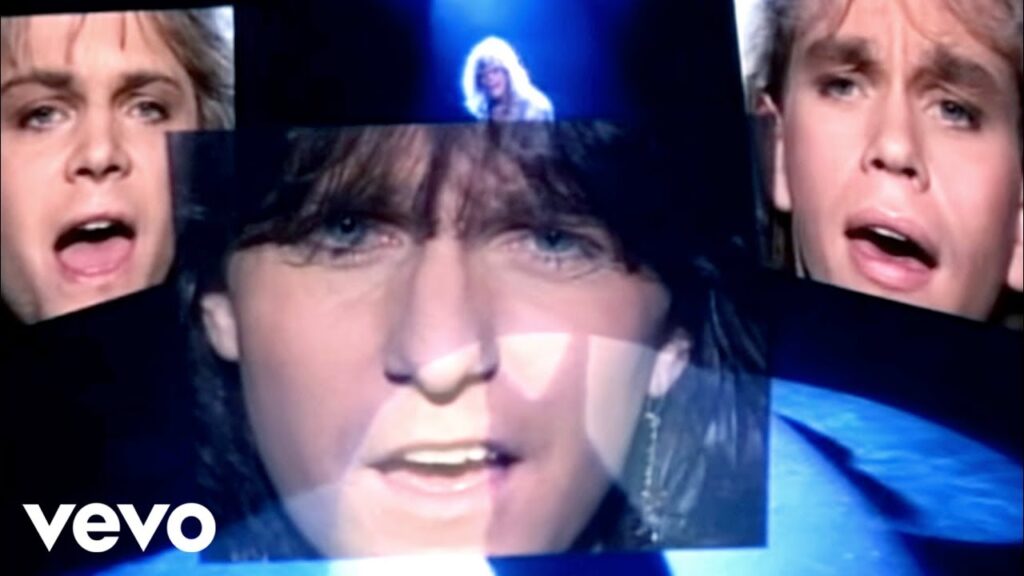
The accompanying music video reinforced the song’s emotional atmosphere. Rather than relying on elaborate visual effects, it focused on the band’s performance while emphasizing the reflective mood of the lyrics. MTV gave the video substantial airplay, introducing the song to millions of viewers during the network’s peak influence.
Over the years, “Carrie” has remained one of Europe’s signature songs. It continues to be a staple of their live performances, often providing one of the evening’s most emotional moments. Audiences routinely sing along to the chorus, transforming an intimate ballad into a powerful communal experience.
The song has also earned lasting respect among musicians and critics for its songwriting. While many 1980s power ballads leaned heavily on dramatic production, “Carrie” succeeds because of its strong melody and honest emotional core. Strip away the polished arrangement, and the song remains compelling when performed with nothing more than piano and voice—a hallmark of truly exceptional songwriting.
Its influence can be heard in countless melodic rock ballads that followed during the late 1980s and early 1990s. Europe demonstrated that arena rock could embrace vulnerability without sacrificing credibility, encouraging other bands to explore more personal and introspective themes.
Today, “Carrie” stands as one of the finest power ballads of the 1980s. It captures everything that made the era’s best rock ballads endure: memorable melodies, polished production, heartfelt lyrics, and a vocal performance filled with genuine emotion. While Europe will forever be associated with the bombastic excitement of “The Final Countdown,” “Carrie” reminds listeners that some of the band’s greatest strengths lay in subtlety and sincerity.
Nearly four decades after its release, “Carrie” continues to connect with audiences because it speaks to one of life’s most universal experiences—the bittersweet realization that even meaningful relationships sometimes come to an end. Through graceful songwriting and an unforgettable performance, Europe transformed that difficult truth into a timeless classic that remains every bit as moving today as it was in 1986.
This post has already been read 101 times!