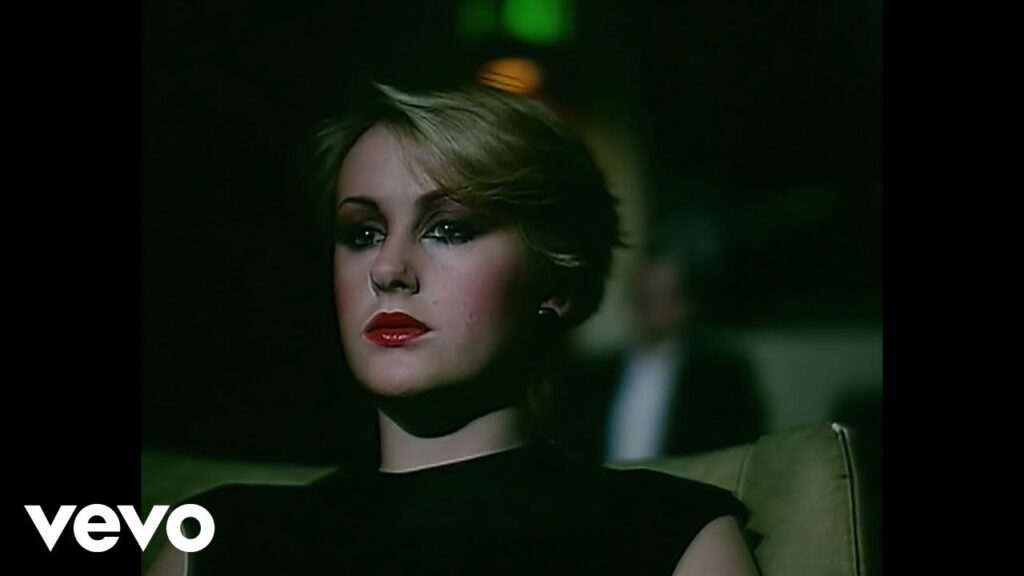
Few songs have done more to define the sound of the early 1980s than “Don’t You Want Me.” Released in late 1981 as the fourth single from The Human League’s groundbreaking album Dare, the song became an international sensation, topping the charts in both the United Kingdom and the United States. With its unforgettable synthesizer hooks, dramatic storytelling, and the striking vocal interplay between Philip Oakey and Susan Ann Sulley, it helped transform synth-pop from a niche movement into a global phenomenon.
At a time when electronic music was still viewed by some as a novelty, “Don’t You Want Me” proved that synthesizers could create songs every bit as emotional, memorable, and commercially successful as traditional guitar-driven rock. More than forty years later, it remains one of the defining recordings of its era and one of the greatest pop singles ever released.
A Song the Band Almost Left Behind
Ironically, The Human League nearly didn’t release “Don’t You Want Me” at all.
The band initially believed other songs on Dare were stronger and viewed the track as one of the album’s weaker moments. Their record label, however, recognized its enormous commercial potential and pushed for it to become the fourth single.
That decision changed everything.
The song quickly climbed to No. 1 in the UK, where it became the Christmas No. 1 single in 1981, before repeating that success in the United States the following year.
Sometimes artists are surprised by what audiences connect with most.
Few examples are more dramatic than this one.
A Story Told Through Two Perspectives
Unlike many pop songs centered on romance, “Don’t You Want Me” unfolds like a short dramatic scene.
Philip Oakey and Susan Ann Sulley portray two former lovers with very different interpretations of their relationship.
Each believes their version of events is the correct one.
Neither completely convinces the other.
That back-and-forth dialogue gives the song a theatrical quality rarely heard in mainstream pop at the time.
Listeners become observers rather than participants, making the emotional tension even more compelling.
Philip Oakey and Susan Ann Sulley’s Perfect Contrast
One of the song’s greatest strengths is the chemistry between its two lead vocalists.
Philip Oakey’s rich baritone provides authority and confidence, while Susan Ann Sulley’s youthful, clear delivery offers an equally convincing counterpoint.
Their voices complement each other beautifully.
Neither performance overshadows the other.
Instead, the contrast creates a believable conversation that drives the entire recording.
It’s one of the finest vocal pairings in synth-pop history.
A Landmark in Electronic Production
Produced by Martin Rushent, “Don’t You Want Me” showcased just how sophisticated electronic music had become.
The arrangement layers synthesizers, drum machines, and sequencers into a polished yet emotionally engaging recording.
Every sound serves a purpose.
The keyboards sparkle without becoming overwhelming.
The rhythm remains steady and danceable.
The production feels expansive while maintaining remarkable clarity.
Even today, it sounds strikingly modern.
The Album That Changed Everything
Dare represented a turning point not only for The Human League but for British pop music as a whole.
Its commercial success demonstrated that synthesizer-based music could dominate mainstream charts around the world.
“Don’t You Want Me” became the album’s defining statement and helped inspire countless electronic artists throughout the following decades.
Without Dare, the landscape of 1980s pop might have looked very different.
A Worldwide Phenomenon
Released at the end of 1981, “Don’t You Want Me” became one of the biggest-selling singles in British history while reaching No. 1 on the Billboard Hot 100 in 1982.
The success transformed The Human League into international stars almost overnight.
The song became a staple of radio, dance clubs, and MTV during the network’s formative years.
Its popularity has remained remarkably consistent ever since.
A Lasting Influence
The influence of “Don’t You Want Me” extends far beyond its original release.
Artists across synth-pop, new wave, indie pop, electronic music, and alternative rock continue to draw inspiration from its storytelling, production techniques, and memorable melodies.
Its dramatic structure has also inspired numerous covers, parodies, and live reinterpretations.
Few songs from the early 1980s have maintained such widespread cultural relevance.
Its appeal crosses generations with ease.
Why It Still Sounds Fresh
Part of the song’s timelessness comes from its balance.
It is emotionally engaging without becoming melodramatic.
Its electronic production feels polished rather than dated.
Its melody is immediately memorable without becoming repetitive.
The lyrics encourage listeners to think while still delivering an irresistible pop experience.
Every ingredient works together seamlessly.
That’s why it continues to attract new fans more than four decades after its release.
Final Thoughts
“Don’t You Want Me” stands among the greatest synth-pop songs ever recorded because it perfectly combines exceptional songwriting, innovative electronic production, memorable performances, and a unique storytelling approach. The Human League demonstrated that synthesizers could deliver drama, emotion, and unforgettable melodies every bit as effectively as traditional rock instrumentation.
Its commercial success helped reshape popular music, opening the door for countless electronic artists who followed. More importantly, it remains an extraordinary piece of songwriting whose emotional complexity continues to resonate with listeners around the world.
Many hit songs define a season.
Many define a decade.
“Don’t You Want Me” helped define the future of pop music itself, and its influence can still be heard every time a synthesizer takes center stage.
This post has already been read 85 times!