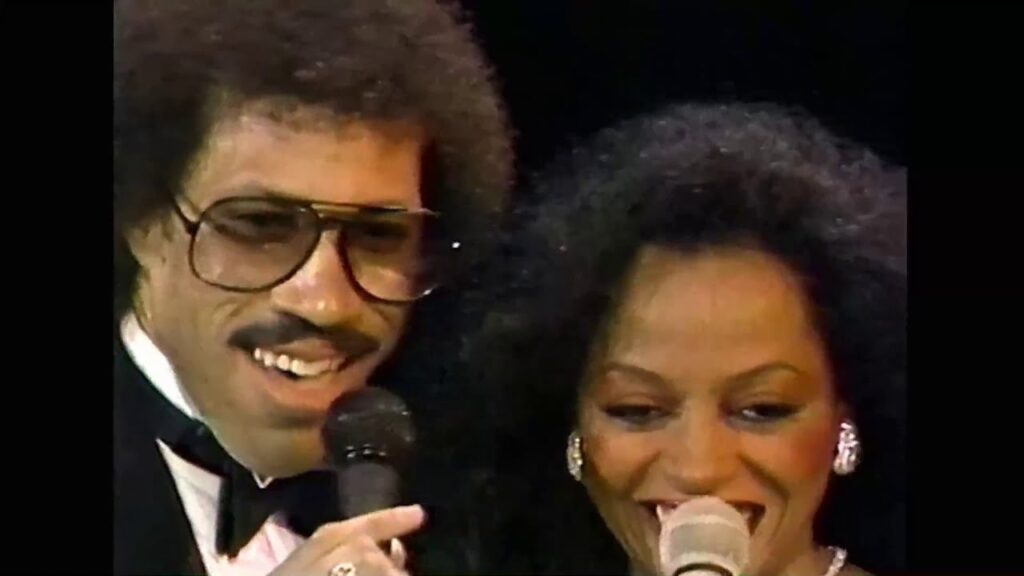
Great musical duets are surprisingly rare. While countless artists have shared the microphone over the years, only a handful of collaborations have become timeless classics that transcend generations. Diana Ross and Lionel Richie’s “Endless Love” is one of those exceptional recordings. Released in 1981 as the theme for the romantic film Endless Love, the song became an international phenomenon, topping charts around the world and earning its place as one of the most successful love songs ever recorded.
Combining Diana Ross’s graceful elegance with Lionel Richie’s warm, soulful voice, “Endless Love” created an emotional connection that resonated with millions of listeners. Its beautiful melody, heartfelt performances, and universal message made it an instant standard for weddings, anniversaries, and romantic celebrations. More than four decades later, it remains one of the defining ballads of the 1980s and one of the greatest duets in popular music history.
By 1981, Diana Ross and Lionel Richie were already two of the biggest names in the music industry. Ross had spent the previous two decades building one of the most remarkable careers in entertainment. After achieving legendary status as the lead singer of The Supremes, she successfully transitioned into an acclaimed solo career with hits such as “Ain’t No Mountain High Enough,” “Touch Me in the Morning,” and “Love Hangover.” She had also earned praise as an actress, receiving an Academy Award nomination for portraying Billie Holiday in Lady Sings the Blues.
Lionel Richie, meanwhile, had become one of the principal songwriters and lead vocalists for The Commodores. While the group was known for energetic funk songs like “Brick House,” Richie had also demonstrated an extraordinary gift for writing tender ballads, including “Three Times a Lady” and “Still.”
Producer Jon Peters approached Richie to write a love theme for Franco Zeffirelli’s romantic drama Endless Love. Rather than simply composing the song, Richie envisioned performing it as a duet with Diana Ross. It proved to be an inspired decision, bringing together two distinctive voices whose styles complemented one another perfectly.
The recording also represented a major step in Richie’s career. Although he remained with The Commodores at the time, the success of “Endless Love” hinted at the enormous solo career that would soon follow.
Musically, “Endless Love” is a masterclass in elegant restraint. Richie composed a melody that unfolds naturally, allowing emotion to build gradually instead of relying on dramatic flourishes. The arrangement begins quietly with gentle piano before introducing strings, subtle percussion, and soft orchestral textures that enhance the romantic atmosphere.
Producer Lionel Richie—working alongside arranger Gene Page—avoided excessive instrumentation, allowing the vocals to remain the unquestioned focal point. Every musical element supports the singers rather than competing for attention. The orchestration grows richer as the song progresses, but it never feels overwhelming or sentimental.
The piano serves as the emotional anchor throughout the recording, while tasteful string arrangements add warmth and sophistication. Light rhythm accompaniment gives the song momentum without distracting from its intimate mood.
One of the recording’s greatest strengths is its pacing. Rather than reaching its emotional peak too early, the arrangement steadily builds until both singers unite in the soaring final passages, creating one of the most memorable climaxes in pop music.
Diana Ross delivers a performance filled with elegance and vulnerability. Her voice glides effortlessly through the melody, conveying tenderness without sacrificing strength. Ross had long mastered the art of emotional storytelling, and her ability to communicate sincerity shines throughout the recording.
Lionel Richie matches her beautifully. His rich tenor provides warmth and reassurance, creating a natural conversational quality between the two singers. Rather than competing for attention, each performer allows the other room to shine, resulting in a genuine musical partnership.
Their chemistry is remarkable. Every exchange feels authentic, as though two people are expressing deeply personal emotions rather than simply singing assigned verses. That sense of connection remains one of the recording’s most enduring qualities.
When Ross and Richie finally sing together in harmony, the effect is breathtaking. Their voices blend seamlessly, producing a sound that is both intimate and majestic. The carefully layered harmonies elevate the emotional impact of the song without becoming overly theatrical.
Lyrically, “Endless Love” expresses unwavering devotion between two people who view their relationship as lasting and unconditional. The song avoids complicated metaphors or elaborate storytelling, instead relying on simple, sincere language that communicates profound affection.
Its universal message has allowed listeners from countless backgrounds to embrace it as their own. Whether played at weddings, anniversaries, or other meaningful occasions, the song continues to symbolize enduring commitment and emotional connection.
Part of its lasting appeal comes from its timelessness. The lyrics avoid references to specific places or moments in time, allowing each generation to interpret the song through its own experiences. That universality has helped “Endless Love” remain relevant for more than forty years.
Released in June 1981, “Endless Love” became an immediate commercial success. It spent nine consecutive weeks at No. 1 on the Billboard Hot 100, making it the biggest hit of both Diana Ross’s solo career and Lionel Richie’s career to that point. The single also topped the Adult Contemporary chart and achieved major success internationally, reaching the Top 10 in numerous countries.
The song received an Academy Award nomination for Best Original Song and also earned Grammy nominations, further recognizing its exceptional songwriting and performances. Although it did not win the Oscar, its popularity far outlasted many of the songs that competed alongside it.
The success of “Endless Love” had a profound impact on Lionel Richie’s career. It demonstrated that he could succeed outside The Commodores and helped pave the way for his blockbuster solo albums Lionel Richie and Can’t Slow Down. Those records would make him one of the defining artists of the 1980s.
For Diana Ross, the song added another milestone to an already extraordinary career. It reinforced her status as one of popular music’s greatest vocalists and introduced her to a new generation of listeners.
Over the decades, “Endless Love” has remained a staple of romantic playlists, wedding ceremonies, and adult contemporary radio. Numerous artists have recorded their own versions, most notably Luther Vandross and Mariah Carey in 1994, but the original duet continues to be regarded as the definitive interpretation.
Its influence can also be heard in countless later pop ballads that emphasize vocal chemistry, understated production, and emotional authenticity over elaborate arrangements. The song demonstrated that simplicity, when executed with exceptional skill, can often be more powerful than complexity.
Today, “Endless Love” stands as one of the greatest love songs ever recorded. Its exquisite melody, elegant production, heartfelt lyrics, and unforgettable performances by Diana Ross and Lionel Richie have ensured its lasting place in popular music history.
For both artists, the recording represents one of the defining achievements of their remarkable careers. It united two legendary performers at exactly the right moment, creating a song whose emotional sincerity continues to touch listeners around the world. More than forty years after it first topped the charts, “Endless Love” remains a shining example of how timeless songwriting and extraordinary vocal performances can create music that truly lives up to its title.
This post has already been read 90 times!