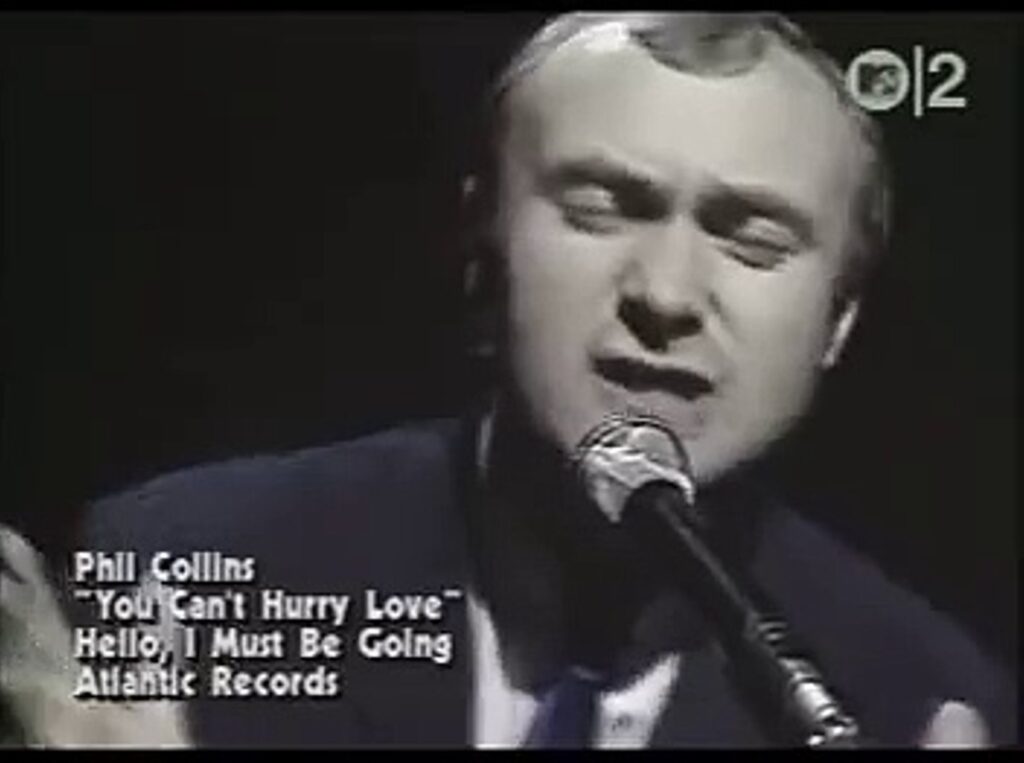
Released in November 1982 as the lead single from Hello, I Must Be Going!, “You Can’t Hurry Love” became one of Phil Collins’ biggest early solo hits and introduced a new generation to one of Motown’s greatest classics. Originally recorded by The Supremes in 1966, Collins’ faithful yet energetic interpretation climbed to No. 10 on the Billboard Hot 100 and reached No. 1 on the UK Singles Chart, becoming one of the defining pop songs of the early MTV era. With its infectious rhythm, polished production, and Collins’ unmistakable vocals, the recording proved that honoring a classic didn’t require reinventing it.
More than forty years later, Collins’ version remains one of the most successful cover songs of the 1980s and a shining example of how timeless songwriting can transcend generations.
A Solo Career on the Rise
By 1982, Phil Collins was already well known as the drummer and lead vocalist of Genesis.
His 1981 solo debut, Face Value, had been a massive success thanks to songs like “In the Air Tonight” and “I Missed Again.” Those recordings showcased Collins’ emotional songwriting and innovative production, earning him recognition as one of pop music’s rising stars.
With Hello, I Must Be Going!, Collins continued to establish his identity outside Genesis.
While the album featured several original compositions, he also chose to pay tribute to one of his favorite Motown recordings.
A Classic Worth Celebrating
Written by the legendary Motown songwriting team of Holland–Dozier–Holland, “You Can’t Hurry Love” was first made famous by The Supremes and lead singer Diana Ross.
Rather than dramatically altering the arrangement, Collins stayed remarkably faithful to the original. He understood that the song’s irresistible melody, joyful rhythm, and timeless message needed little improvement.
His version feels like a celebration rather than a reinvention.
That respect for the source material helped win over longtime Motown fans while introducing younger listeners to a true classic.
Patience and Faith in Love
The song’s message is beautifully simple.
Rather than searching desperately for romance, the lyrics encourage patience and trust that genuine love will arrive when the time is right. The advice comes from a mother’s wisdom, reminding the narrator that lasting relationships cannot be rushed.
Its optimistic perspective has universal appeal.
Nearly everyone can relate to waiting for something meaningful while learning that the best things often take time.
That timeless lesson continues to resonate today.
Phil Collins’ Effortless Performance
Collins delivers the song with warmth, enthusiasm, and genuine affection.
Instead of trying to imitate The Supremes, he brings his own personality to the performance while preserving the upbeat spirit of the original. His slightly raspy voice adds a distinctive character that complements the bright arrangement.
His delivery feels relaxed and joyful.
The recording captures an artist clearly having fun while honoring one of his musical inspirations.
A Remarkably Authentic Production
Produced by Phil Collins and Hugh Padgham, the recording carefully recreates the classic Motown sound.
Lively drums, bouncing bass, tambourine, handclaps, piano, horns, and layered backing vocals combine to evoke the energy of the original while benefiting from modern recording technology. Collins’ attention to detail is evident throughout the arrangement.
Despite being recorded more than fifteen years after the original, the song never feels dated.
It bridges two musical eras with remarkable ease.
A Worldwide Smash
“You Can’t Hurry Love” became one of Collins’ earliest international solo successes.
The single reached No. 10 on the Billboard Hot 100, climbed to No. 1 on the UK Singles Chart, and earned strong chart positions throughout Europe, Canada, Australia, and beyond. It helped propel Hello, I Must Be Going! to commercial success while further establishing Collins as a major solo artist.
The song also broadened his audience.
Fans who discovered Collins through this upbeat pop recording often explored both his original material and the Motown classics that inspired him.
A Memorable MTV Video
The music video embraced Collins’ playful sense of humor.
Using split-screen effects, the clip features three versions of Collins performing together as though they were members of a vocal group. The lighthearted presentation matched the song’s cheerful mood while showcasing Collins’ personality.
The clever concept became a favorite on MTV.
Its simplicity and charm helped make the video one of the memorable clips of the early 1980s.
Why It Still Sounds Fresh
Part of the enduring appeal of Collins’ version lies in its sincerity.
He never tries to outdo the original recording. Instead, he faithfully captures its spirit while adding just enough of his own style to make it feel personal.
The timeless melody and uplifting rhythm remain impossible to resist.
Whether heard on classic hits radio or in a movie soundtrack, the song continues to bring smiles to listeners of all ages.
Legacy
“You Can’t Hurry Love” stands as one of Phil Collins’ most beloved recordings and one of the finest cover songs of the 1980s. By respectfully honoring a Motown masterpiece while introducing it to a new audience, Collins demonstrated that great songs never lose their magic.
Its international chart success, memorable music video, and lasting popularity have secured its place among the essential classics of the MTV era. More importantly, it helped bridge generations of music fans, connecting the golden age of Motown with the polished pop sound of the 1980s.
More than forty years after its release, “You Can’t Hurry Love” continues to delight audiences with its irresistible groove, joyful spirit, and timeless message that patience is often rewarded. Bright, infectious, and wonderfully performed, it remains one of Phil Collins’ signature hits and one of the most successful tributes ever paid to the Motown sound.
This post has already been read 96 times!