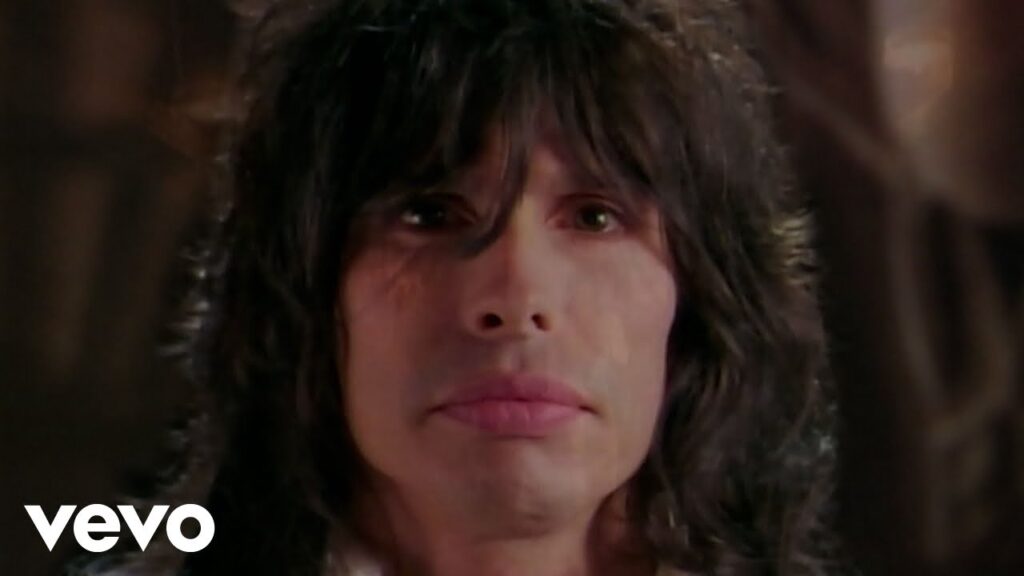
By the mid-1980s, Aerosmith had accomplished what few rock bands ever have: they resurrected a career that many believed was over. After battling internal turmoil, substance abuse, and declining album sales during the late 1970s and early 1980s, the Boston quintet returned stronger than ever with Permanent Vacation in 1987. The album produced several major hits, but none reached a broader audience than the power ballad “Angel.”
Released in early 1988, “Angel” climbed to No. 3 on the Billboard Hot 100, becoming Aerosmith’s highest-charting single at the time. It introduced the band to a new generation of fans while reminding longtime listeners that behind the swagger and hard rock attitude were gifted songwriters capable of delivering emotionally resonant ballads. With Steven Tyler’s passionate vocal performance and Joe Perry’s expressive guitar work, “Angel” remains one of the defining rock ballads of the 1980s.
The Story Behind the Song
The years leading up to Permanent Vacation marked a dramatic turnaround for Aerosmith. Following successful rehabilitation efforts and renewed commitment from all five members, the band regained momentum with the help of collaborations like Run-D.M.C.’s groundbreaking remake of “Walk This Way.”
Seeking fresh material for their comeback album, Aerosmith worked with several outside songwriters, a decision that initially divided some fans but ultimately revitalized the band’s commercial fortunes.
“Angel” was co-written by Steven Tyler and professional songwriter Desmond Child, whose songwriting credits already included hits for Bon Jovi, Kiss, and later Alice Cooper. Child had an extraordinary ability to craft memorable choruses, while Tyler brought the emotional intensity and distinctive personality that made the song unmistakably Aerosmith.
Released as the album’s third single, “Angel” quickly became a crossover success, earning heavy airplay on both rock and pop radio while helping Permanent Vacation become one of the band’s biggest-selling albums.
The Sound
“Angel” follows the classic power ballad formula, but it does so with exceptional craftsmanship.
The song opens with gentle piano and keyboards before gradually introducing acoustic guitar, bass, drums, and electric guitar. Rather than rushing toward its emotional peak, the arrangement unfolds patiently, allowing the anticipation to build naturally.
Producer Bruce Fairbairn gives every instrument room to breathe. The verses remain intimate, emphasizing Tyler’s vocal before the full band enters with increasing intensity.
Joe Perry’s guitar work is particularly effective. Instead of relying on flashy solos, he focuses on melodic phrases that complement the song’s emotional direction. His tasteful playing demonstrates that technical brilliance often comes through restraint rather than speed.
The production captures the polished arena-rock sound of the late 1980s without becoming overly processed. The balance between keyboards and guitars allows the song to appeal equally to rock and pop audiences.
Performance and Musicianship
Steven Tyler delivers one of the strongest vocal performances of his career.
His raspy voice, often associated with high-energy rock songs, reveals surprising tenderness during the verses before soaring into the dramatic chorus. Tyler balances vulnerability and power beautifully, making every emotional moment feel authentic rather than theatrical.
Joe Perry and Brad Whitford provide tasteful guitar work throughout, creating a rich sonic backdrop without overwhelming the vocal. Tom Hamilton’s bass anchors the arrangement, while Joey Kramer delivers restrained drumming that gradually builds alongside the song’s emotional arc.
The band’s chemistry is evident in every section. Rather than showcasing individual performances, each member contributes to a unified sound that serves the composition first.
This teamwork allows “Angel” to achieve its emotional impact without sacrificing the musical identity that had always defined Aerosmith.
Why It Worked
Several factors helped “Angel” become one of Aerosmith’s biggest hits.
First, the melody is unforgettable. The chorus is immediately memorable, making it one of the band’s strongest sing-along moments.
Second, Steven Tyler’s vocal performance gave the song remarkable emotional credibility. His ability to move between delicate phrasing and explosive power kept listeners engaged from beginning to end.
Timing also played an important role. During the late 1980s, rock ballads dominated both radio and MTV. “Angel” fit comfortably alongside songs by Bon Jovi, Whitesnake, Poison, and Heart while maintaining Aerosmith’s distinctive blues-rock personality.
The music video further boosted the song’s popularity. Featuring actress Sonni Barger alongside the band, it received heavy MTV rotation and helped introduce Aerosmith to younger viewers who had not experienced the group’s original success during the 1970s.
Finally, the song demonstrated that Aerosmith’s comeback was genuine. It wasn’t simply nostalgia—it was evidence that the band could still create contemporary hits of the highest quality.
The Legacy
Although Aerosmith would go on to release even bigger ballads like “I Don’t Want to Miss a Thing,” “Angel” remains one of the defining songs of their late-1980s resurgence.
Its success helped establish the blueprint for the band’s remarkable commercial run that continued through the 1990s with albums like Pump and Get a Grip. It also proved that collaborating with outside writers could enhance rather than diminish Aerosmith’s creative voice.
Today, “Angel” remains a staple of classic rock radio and appears regularly on lists celebrating the greatest power ballads of the decade. It continues to be a favorite among fans who appreciate the emotional side of Aerosmith’s catalog.
For many listeners, it represents the moment when one of America’s greatest rock bands completed one of the most successful comeback stories in music history.
Final Thoughts
“Angel” is much more than a successful rock ballad. It represents a turning point in Aerosmith’s career—a moment when experience, renewed focus, and exceptional songwriting combined to produce one of the band’s most enduring recordings.
Steven Tyler’s heartfelt vocal performance, Joe Perry’s elegant guitar work, and Bruce Fairbairn’s polished production create a timeless recording that remains every bit as powerful today as it was in 1988.
While Aerosmith will always be celebrated for hard-rock classics like “Dream On,” “Walk This Way,” and “Sweet Emotion,” “Angel” reminds listeners that the band was equally capable of creating emotionally rich songs built around melody rather than sheer volume.
More than three decades after its release, “Angel” continues to stand as one of the finest power ballads of the 1980s and one of the defining achievements of Aerosmith’s extraordinary career. It remains a shining example of how great rock bands can evolve without losing the qualities that made them legendary in the first place.
This post has already been read 54 times!