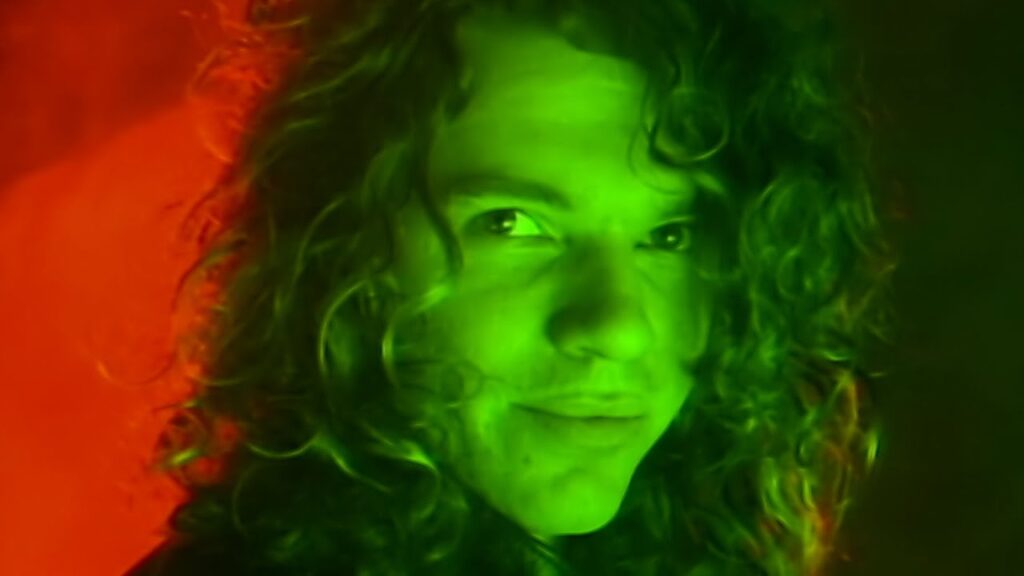
Released in February 1988, “Devil Inside” became one of the signature songs that transformed INXS from a successful Australian rock band into a global phenomenon. Built around a hypnotic guitar riff, a relentless groove, and Michael Hutchence’s magnetic vocal performance, the song perfectly captured the sleek, bluesy rock sound that made Kick one of the defining albums of the 1980s. More than three decades later, “Devil Inside” remains one of INXS’s most recognizable recordings and a shining example of how rock music could be both sophisticated and irresistibly catchy.
Although INXS had enjoyed years of success in Australia and steadily built an international following through albums like The Swing and Listen Like Thieves, it was 1987’s Kick that elevated the band to superstar status. Consisting of Michael Hutchence, Andrew Farriss, Tim Farriss, Jon Farriss, Garry Gary Beers, and Kirk Pengilly, the six-piece group blended rock, funk, pop, and dance rhythms into a sound that was uniquely their own. Unlike many of their contemporaries, INXS didn’t rely on flashy guitar solos or overproduced synthesizers. Instead, they emphasized groove, atmosphere, and chemistry.
“Devil Inside” was the second single released from Kick, following the success of “Need You Tonight.” While that song introduced listeners to the band’s seductive, minimalist style, “Devil Inside” expanded on the formula with a larger, more dramatic sound.
The song was written primarily by keyboardist Andrew Farriss and lead singer Michael Hutchence, the songwriting partnership responsible for many of INXS’s greatest hits. Together, they had an uncanny ability to combine memorable pop hooks with darker lyrical themes, creating songs that were both commercially appealing and emotionally intriguing.
Lyrically, “Devil Inside” explores the idea that every person possesses both positive and negative impulses. Rather than presenting good and evil as simple opposites, the song suggests that temptation and inner conflict are universal aspects of human nature. Hutchence deliberately leaves much of the meaning open to interpretation, allowing listeners to apply the lyrics to their own experiences. That ambiguity has helped the song remain compelling long after its release.
From its opening moments, “Devil Inside” establishes an unmistakable atmosphere. A steady drumbeat and haunting guitar textures slowly build tension before the band settles into one of the most infectious grooves of the decade. Instead of rushing toward the chorus, the arrangement develops patiently, giving each instrument room to contribute.
Andrew Farriss deserves enormous credit for the song’s layered arrangement. His keyboards provide subtle textures throughout the recording without dominating the mix, while Tim Farriss delivers one of the most memorable guitar riffs of the 1980s. The riff is deceptively simple yet incredibly effective, creating a hypnotic foundation that drives the entire song.
The rhythm section is equally impressive. Garry Gary Beers’ bass playing locks tightly with Jon Farriss’ crisp drumming, producing a groove that feels almost danceable while retaining the power of a rock record. This combination of rhythmic precision and rock energy became one of INXS’s trademarks and helped distinguish them from many arena rock bands of the era.
Michael Hutchence delivers one of the defining vocal performances of his career. Blessed with a rich, expressive voice and extraordinary charisma, Hutchence sings with effortless confidence. He never oversells the lyrics or resorts to vocal theatrics. Instead, his relaxed delivery creates a sense of mystery and intensity that perfectly matches the song’s subject matter. His performance is equal parts rock singer, soul vocalist, and storyteller.
Producer Chris Thomas played a crucial role in shaping the sound of Kick. Having previously worked with artists such as The Beatles, Roxy Music, and Elton John, Thomas understood how to balance commercial polish with genuine musical energy. On “Devil Inside,” every instrument is crystal clear, yet the recording never feels sterile. The production remains remarkably fresh, avoiding many of the excesses that date some late-1980s rock recordings.
Commercially, the song became another massive success for INXS. It climbed to No. 2 on the Billboard Hot 100 in the United States, making it one of the band’s highest-charting singles. Around the world, “Devil Inside” helped drive Kick toward sales exceeding 20 million copies, cementing the album’s status as one of the biggest releases of the decade.
The accompanying music video added to the song’s mystique. Directed by Joel Schumacher, the black-and-white clip features surreal imagery and dramatic performances rather than a conventional narrative. Michael Hutchence’s screen presence is impossible to ignore, and the video became a staple of MTV during the network’s golden years.
One reason “Devil Inside” has endured is its refusal to fit neatly into one genre. It blends rock, funk, blues, dance, and pop into a seamless whole, making it equally effective on classic rock radio, alternative stations, and dance-oriented playlists. Few songs from the era possess such broad musical appeal.
The track also represents the peak of INXS’s creative partnership. Every member contributes something essential, from the layered instrumentation to the impeccable rhythm section and Hutchence’s unforgettable vocal. It is a true band performance rather than simply a showcase for one individual.
Today, “Devil Inside” remains one of the highlights of INXS’s catalog and one of the defining rock singles of the late 1980s. It continues to receive heavy airplay on classic rock and classic hits stations while introducing new listeners to the band’s timeless sound through streaming services and film soundtracks.
More than thirty-five years after its release, “Devil Inside” stands as one of INXS’s greatest achievements. Its hypnotic groove, sophisticated production, memorable guitar work, and Michael Hutchence’s magnetic performance combine to create a song that feels just as powerful today as it did in 1988. It is a reminder that the very best rock music doesn’t simply rely on volume or spectacle—it captivates through atmosphere, confidence, and unforgettable songwriting.
This post has already been read 77 times!