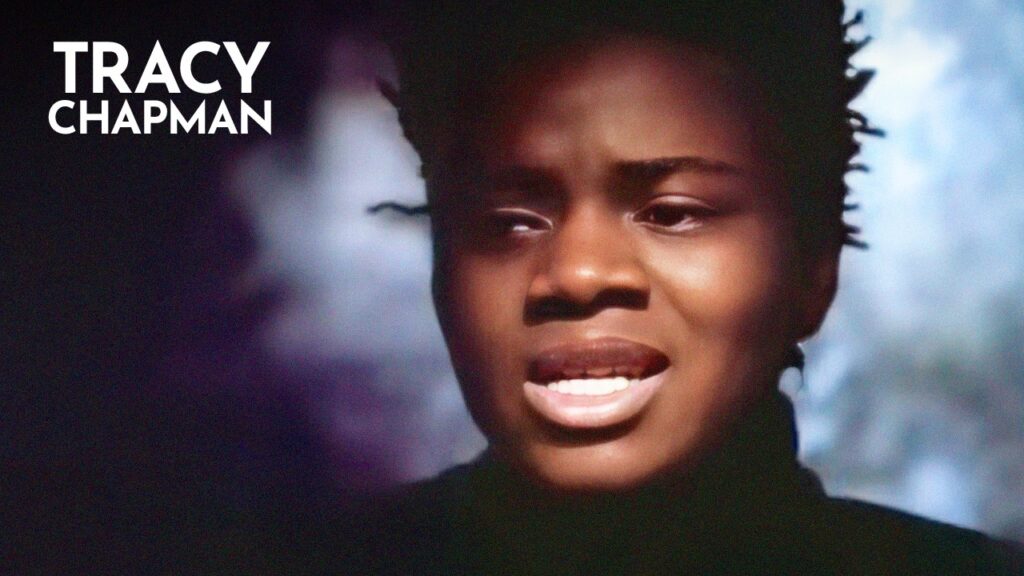
Not every classic song announces itself with explosive guitars or towering choruses. Some become unforgettable through honesty, simplicity, and emotional depth. “Fast Car” by Tracy Chapman is one of those rare recordings. Released in 1988 as the lead single from her self-titled debut album, the song captivated listeners with its intimate storytelling, understated production, and one of the most moving vocal performances of its era.
While many pop hits of the late 1980s embraced larger-than-life production and flashy arrangements, “Fast Car” took the opposite approach. It relied on an acoustic guitar, a gentle rhythm, and Chapman’s unmistakable voice to tell a deeply human story about hope, hardship, love, and the dream of escaping difficult circumstances.
The result was a song that transcended genres, earning critical acclaim, commercial success, and a permanent place among the greatest singer-songwriter recordings ever made.
A Story That Feels Remarkably Real
One of the reasons “Fast Car” has remained so powerful is its extraordinary storytelling.
Rather than focusing on a single dramatic event, Tracy Chapman presents a series of ordinary moments that gradually reveal the lives of two people trying to build something better.
The narrator dreams of escaping poverty and creating a brighter future, believing that a fast car might provide the opportunity to leave behind hardship. As the story unfolds, those hopes collide with the realities of responsibility, disappointment, and difficult choices.
There are no exaggerated plot twists.
No unbelievable coincidences.
Just life unfolding in all its beauty and complexity.
That authenticity allows listeners to see pieces of their own experiences within the song.
Tracy Chapman’s Extraordinary Songwriting
Tracy Chapman wrote “Fast Car” while she was still in college, an astonishing achievement considering the emotional maturity of the finished work.
Her writing avoids melodrama.
Instead, she trusts small details to carry enormous emotional weight.
Every verse advances the story naturally, allowing listeners to experience the characters’ hopes and setbacks without feeling manipulated.
She never judges her characters.
She simply presents their lives with empathy and compassion.
That restraint is one of the song’s greatest strengths.
Many songwriters tell stories.
Chapman invites listeners to live inside them.
A Voice Unlike Any Other
Tracy Chapman possesses one of the most distinctive voices in modern music.
Warm.
Rich.
Honest.
Her performance on “Fast Car” feels almost conversational, as though she’s sharing deeply personal memories with a close friend.
She never relies on vocal theatrics to create emotion.
Instead, every word is delivered with remarkable sincerity.
That understated approach makes the song even more affecting.
The emotion isn’t forced.
It’s simply there.
Very few singers communicate vulnerability with such quiet confidence.
Simplicity as a Strength
The arrangement of “Fast Car” demonstrates that less can truly be more.
The acoustic guitar provides a steady foundation throughout the song, creating a gentle sense of forward motion that mirrors the journey described in the lyrics.
Subtle percussion and tasteful accompaniment gradually enter without ever distracting from Chapman’s voice.
Every musical decision supports the story.
Nothing feels unnecessary.
The production allows silence and space to become part of the emotional experience.
In an era often defined by excess, that simplicity made the song stand out immediately.
A Breakthrough That Changed Everything
Before “Fast Car,” Tracy Chapman was largely unknown outside local music circles.
That changed almost overnight.
Following a memorable performance at the 1988 Nelson Mandela 70th Birthday Tribute concert in London, interest in Chapman and her debut album skyrocketed. Millions of viewers who had never heard her music suddenly found themselves captivated by her voice and songwriting.
“Fast Car” climbed the charts around the world, becoming one of the year’s most acclaimed singles and introducing audiences to a remarkable new artist whose music defied easy categorization.
It wasn’t just a hit.
It was a cultural moment.
Crossing Musical Boundaries
“Fast Car” achieved something few songs ever accomplish.
It found success across multiple musical genres.
The song received airplay on pop, adult contemporary, folk, and even rock radio stations, appealing to listeners who often had little overlap in their musical tastes.
Its universal themes of hope, struggle, and resilience allowed audiences from vastly different backgrounds to connect with it.
The song proved that exceptional storytelling could transcend marketing categories.
Great songs don’t belong to one genre.
They belong to everyone.
A Lasting Legacy
The influence of “Fast Car” has only grown with time.
Generations of singer-songwriters have cited Tracy Chapman as an inspiration, praising her ability to combine poetic storytelling with accessible melodies.
The song has also found new audiences through numerous cover versions and live performances, most notably Luke Combs’ hugely successful 2023 interpretation, which introduced Chapman’s songwriting to millions of younger listeners while bringing renewed appreciation to the original recording.
Remarkably, Chapman’s version has never lost its emotional power.
Each new generation seems to discover it as though it were written yesterday.
More Than a Song About Escape
Although the title suggests speed and freedom, the car itself serves as a symbol rather than the true focus of the story.
The vehicle represents possibility.
Hope.
The belief that life can become something better.
Throughout the song, Chapman gently explores how dreams evolve over time and how difficult it can be to break free from cycles that seem impossible to escape.
Yet even in its most heartbreaking moments, the song never feels cynical.
It acknowledges disappointment while preserving a quiet sense of dignity and resilience.
That balance is one reason the song continues to resonate so deeply.
Final Thoughts
“Fast Car” stands among the greatest singer-songwriter recordings ever made because it accomplishes something remarkably rare. Tracy Chapman’s exceptional storytelling, intimate vocal performance, understated production, and timeless themes combine to create a song that feels deeply personal while speaking to universal human experiences.
Its commercial success introduced the world to one of music’s finest storytellers, but its artistic legacy extends far beyond awards and chart positions. It demonstrated that quiet honesty could have just as much impact as stadium-sized production or elaborate instrumentation.
Many songs tell listeners how to feel.
“Fast Car” simply tells a story and trusts the listener to find their own emotions within it.
More than thirty-five years after its release, that trust continues to be rewarded. The song remains as moving, compassionate, and beautifully written as ever—a masterpiece of modern folk music and one of the most enduring recordings of the twentieth century.
This post has already been read 85 times!