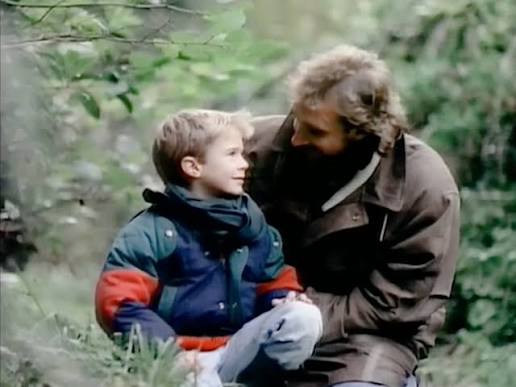
There are songs that entertain, songs that inspire, and songs that quietly change the way people think about their own lives. “The Living Years” by Mike + the Mechanics belongs in that final category. Released in late 1988, the song became one of the most moving and universally relatable recordings of the era, telling a deeply personal story about missed opportunities between a father and son.
With its heartfelt lyrics, unforgettable melody, and the soulful voice of Paul Carrack, “The Living Years” became far more than another pop hit. It encouraged listeners to pick up the phone, mend broken relationships, and say the things that often go left unsaid until it’s too late.
More than thirty-five years after its release, the song remains one of the most powerful ballads ever recorded about family, communication, and the importance of making peace while there’s still time.
A Side Project That Became Something Special
Mike + the Mechanics began as a side project for Mike Rutherford, guitarist and bassist for Genesis.
Rather than simply creating music that sounded like Genesis, Rutherford assembled a group of talented musicians with distinct voices and songwriting styles. Among the band’s greatest strengths was the decision to feature multiple lead singers, particularly Paul Carrack and Paul Young, whose contrasting voices gave the group remarkable versatility.
By the late 1980s, Mike + the Mechanics had already enjoyed success with songs like “Silent Running” and “All I Need Is a Miracle.”
“The Living Years” would elevate the band to an entirely new level.
A Song Born from Personal Loss
The lyrics were written by B. A. Robertson, who drew inspiration from the death of his own father.
Robertson had experienced the pain of unresolved conversations and lingering regrets that often follow the loss of a parent. Rather than writing specifically about one family, he created a song that spoke to nearly everyone.
The emotions feel universal.
Misunderstandings.
Generational differences.
Pride.
Love left unspoken.
Nearly every family has experienced some combination of those feelings.
That’s why the song continues touching listeners across generations.
Paul Carrack’s Remarkable Vocal
Although Mike Rutherford conceived the project, “The Living Years” truly belongs to Paul Carrack.
His voice perfectly balances strength and vulnerability.
Carrack doesn’t oversing the material.
He allows the lyrics to carry the emotional weight.
Every line sounds sincere.
Every phrase feels deeply personal.
When the chorus arrives, his performance grows naturally without becoming dramatic for the sake of drama.
It’s one of the finest vocal performances of the entire decade.
Listeners believe every word.
Lyrics That Speak to Everyone
The song’s central message is beautifully simple.
Don’t wait.
If something needs to be said, say it now.
Apologize.
Forgive.
Express love.
Resolve disagreements.
Life doesn’t always provide another opportunity.
Rather than assigning blame, the lyrics acknowledge that communication often breaks down between generations despite good intentions on both sides.
It’s a remarkably mature perspective.
Few pop songs tackle such emotionally complex subjects with equal compassion for everyone involved.
A Beautifully Restrained Arrangement
Musically, “The Living Years” avoids unnecessary theatrics.
Gentle piano introduces the melody.
Warm keyboards and guitars gradually build the arrangement.
Subtle percussion maintains steady momentum.
The addition of a gospel choir during the chorus provides emotional lift without overwhelming Carrack’s vocal.
Producer Christopher Neil understood that simplicity would allow the song’s message to remain front and center.
The production still sounds elegant decades later.
A Worldwide Hit
Released as the lead single from the album Living Years, the song became Mike + the Mechanics’ biggest commercial success.
It reached No. 1 on the Billboard Hot 100 in the United States and climbed into the Top 10 across numerous countries around the world.
The recording earned widespread critical praise while introducing the band to audiences far beyond Genesis fans.
Its success proved that thoughtful songwriting could still compete at the highest level of mainstream pop music.
More Than Just a Family Song
Although often interpreted as a song about fathers and sons, “The Living Years” speaks to every important relationship.
Parents and daughters.
Siblings.
Friends.
Partners.
Anyone who has experienced misunderstanding or emotional distance can find something meaningful within its lyrics.
The song reminds listeners that unresolved conflicts often become lifelong regrets.
That message remains just as relevant today as it was in 1988.
A Song That Comforts as Much as It Hurts
Many emotional ballads leave listeners feeling sad.
“The Living Years” does something different.
While acknowledging loss and regret, it also offers hope.
Its message encourages action rather than despair.
The song gently reminds us that as long as people are still alive, healing remains possible.
That’s a remarkably optimistic conclusion for a song dealing with such difficult emotions.
Perhaps that’s why it has become a favorite at memorial services, family gatherings, and moments of personal reflection.
Mike + the Mechanics’ Finest Achievement
Although the band produced several memorable hits throughout their career, “The Living Years” stands apart.
It perfectly combines Mike Rutherford’s musical instincts, B. A. Robertson’s thoughtful lyrics, Christopher Neil’s tasteful production, and Paul Carrack’s extraordinary vocal performance.
Every contributor served the song rather than individual ambition.
The result became something timeless.
A Timeless Reminder to Speak from the Heart
More than thirty-five years after its release, “The Living Years” continues moving audiences because its message never loses relevance. Every generation struggles with communication. Every family experiences misunderstandings. Every life eventually teaches the importance of saying what truly matters before the opportunity disappears.
Its beautiful melody, heartfelt lyrics, restrained production, and Paul Carrack’s unforgettable vocal have secured its place among the greatest emotional ballads ever recorded. The song doesn’t merely describe regret—it encourages listeners to avoid it.
For Mike + the Mechanics, “The Living Years” became much more than their biggest hit. It became a lasting reminder that the most meaningful conversations should happen while the people we love are still here to hear them—and that simple truth has made it one of the most enduring songs of the 1980s.
This post has already been read 89 times!