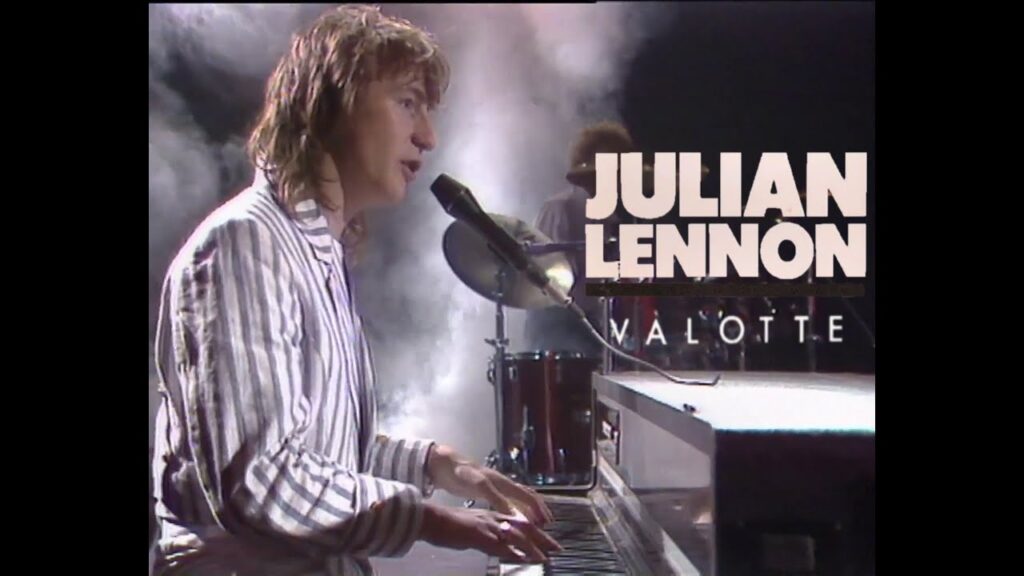
Carrying one of the most famous last names in music history can be both a blessing and a burden. When Julian Lennon launched his recording career in the early 1980s, comparisons to his father, John Lennon, were inevitable. Listeners immediately noticed similarities in their voices, while critics wondered whether Julian could establish his own musical identity. Instead of trying to imitate his father’s legacy, Julian introduced himself with “Valotte,” a beautifully crafted ballad that showcased his own songwriting talents and artistic sensitivity.
Released in 1984 as the title track and lead single from his debut album, “Valotte” reached No. 9 on the Billboard Hot 100 and earned Julian Lennon a Grammy nomination for Best New Artist. With its graceful melody, elegant production, and heartfelt vocal performance, the song became one of the standout soft rock hits of the decade. More than forty years later, it remains Julian Lennon’s signature recording and a remarkable debut from an artist determined to create his own path.
The Story Behind the Song
Following John Lennon’s tragic death in 1980, public interest naturally turned toward his children. Julian, who had inspired Beatles classics like “Hey Jude” and “Lucy in the Sky with Diamonds,” spent several years developing as a songwriter before deciding to pursue a recording career.
The inspiration for “Valotte” came during a stay at the historic Hôtel de Valois in France. Julian was living in a small room there while writing songs for what would become his debut album. The peaceful surroundings and reflective atmosphere inspired the composition, with the hotel’s name eventually becoming the song’s title.
Producer Phil Ramone recognized the quality of Julian’s material and helped shape the sessions into a polished debut album. Rather than emphasizing Julian’s famous family connection, Ramone encouraged him to focus on honest songwriting and authentic performances.
The result was a song that introduced Julian as a talented artist in his own right while acknowledging, without exploiting, the unmistakable vocal resemblance to his father.
The Sound
“Valotte” is a beautifully understated example of mid-1980s soft rock.
The recording opens with delicate acoustic guitar before gradually introducing piano, keyboards, bass, subtle percussion, and tasteful electric guitar textures. Every instrument is carefully balanced, creating an atmosphere of warmth and quiet reflection.
Phil Ramone’s production emphasizes clarity and natural performances rather than elaborate studio effects. The arrangement allows the melody to develop gradually, building emotional depth without becoming overly dramatic.
The acoustic guitar remains central throughout the song, supported by gentle keyboard textures that add richness without overwhelming the recording.
The production’s simplicity has helped the song age exceptionally well. Rather than sounding tied to specific trends of the era, it feels timeless because of its emphasis on songwriting and musicianship.
Performance and Musicianship
Julian Lennon delivers an impressive vocal performance filled with sincerity and restraint.
While the similarities to John Lennon are impossible to ignore, Julian avoids imitation. His phrasing, emotional approach, and vocal tone reflect his own personality, resulting in a performance that feels genuine rather than derivative.
His greatest strength lies in his ability to communicate vulnerability without becoming sentimental. Every line feels honest, drawing listeners into the quiet intimacy of the song.
The accompanying musicians perform with equal sensitivity. The rhythm section provides subtle support while keyboards and guitars add tasteful melodic accents that enhance rather than distract from the vocal.
The arrangement demonstrates remarkable discipline, allowing silence and space to become as important as the notes themselves.
Why It Worked
Several factors helped “Valotte” become Julian Lennon’s breakthrough hit.
First, the melody is elegant and memorable. Rather than relying on dramatic hooks, the song unfolds naturally, rewarding repeated listening.
Second, Julian’s vocal performance immediately established him as more than simply “John Lennon’s son.” While listeners recognized the family resemblance, they also heard a capable songwriter and expressive singer with his own artistic voice.
The production also broadened the song’s appeal. Soft rock and adult contemporary radio embraced its polished sound, while pop audiences appreciated its emotional sincerity.
Curiosity undoubtedly introduced many listeners to the song, but its quality is what kept them coming back. “Valotte” succeeded because it was an outstanding recording, not merely because of Julian’s famous surname.
The Legacy
“Valotte” remains Julian Lennon’s best-known recording and one of the strongest debut singles of the 1980s.
The song demonstrated that he possessed genuine songwriting ability, helping establish a career that would include additional hits such as “Too Late for Goodbyes.”
Although comparisons to John Lennon have continued throughout Julian’s career, “Valotte” stands as proof that he earned his success through talent rather than inheritance.
Today, the song remains a staple of adult contemporary and classic hits playlists while continuing to introduce new listeners to Julian’s music. It also serves as a reminder that remarkable artistry can flourish even under the weight of extraordinary expectations.
Final Thoughts
“Valotte” is one of the most graceful and heartfelt debut singles of the 1980s. Its beautiful melody, understated production, and sincere vocal performance combine to create a recording that continues to resonate more than four decades after its release.
Julian Lennon approached the daunting challenge of launching his career with humility, confidence, and genuine musical ability. Supported by Phil Ramone’s elegant production and exceptional musicianship, he delivered a song that stands comfortably on its own merits while quietly honoring the musical heritage that shaped him.
More than forty years later, “Valotte” remains Julian Lennon’s defining achievement and one of the hidden treasures of 1980s soft rock. It is a timeless reminder that while family legacies may open doors, lasting success is earned through honesty, craftsmanship, and songs that connect with listeners on a deeply personal level.
This post has already been read 65 times!